
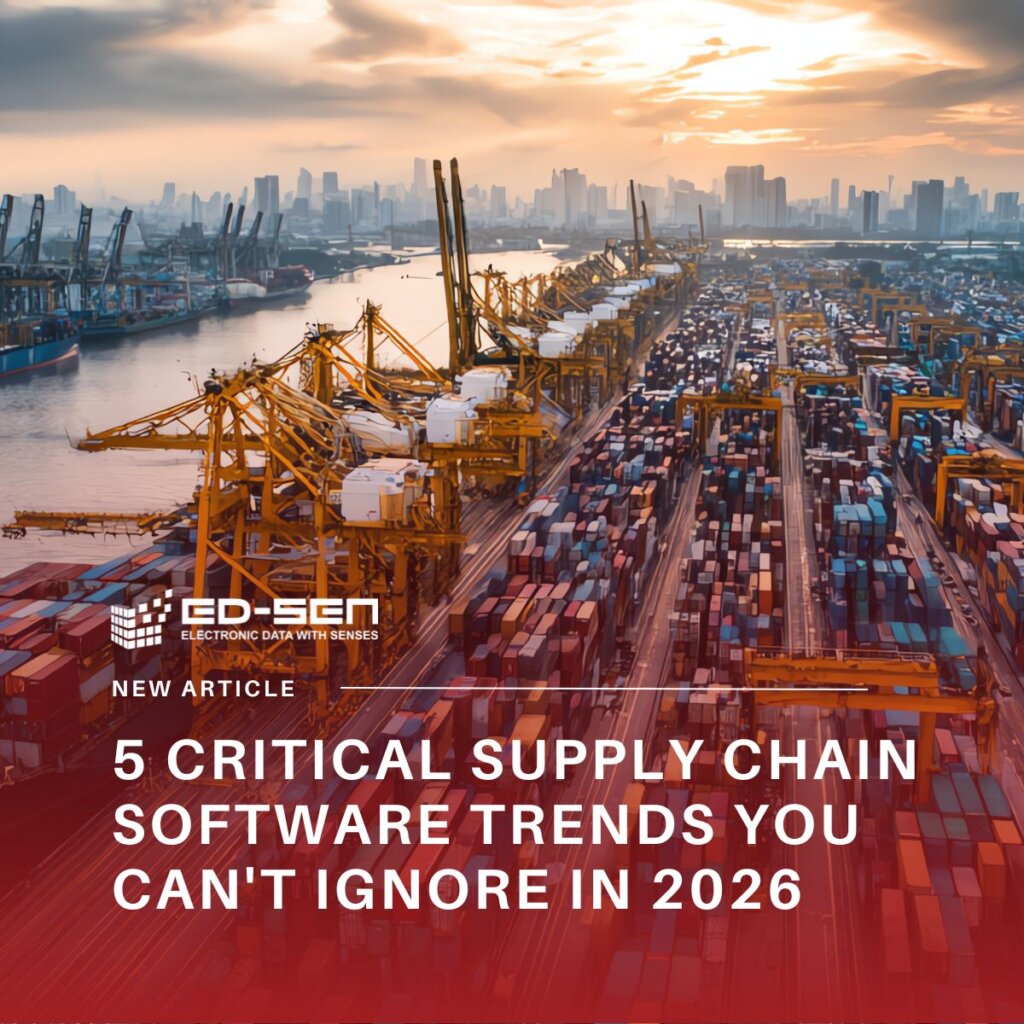
In recent years, the word “disruption” has become synonymous with “supply chain.” From global pandemics to geopolitical conflicts and port bottlenecks, the fragility of traditional, siloed supply chains has been fully exposed. Simply put: the old way of managing operations with spreadsheets and outdated software is no longer viable.
To build the resilient, agile, and efficient operation that modern business demands, leaders must embrace digitalization. This means adopting the latest supply chain software trends designed to create visibility, predict disruption, and automate complex processes. This guide explores the critical trends shaping the future and how they create a more competitive business.
What Are the Top Supply Chain Software Trends?
The shift is moving away from simple record-keeping to intelligent, predictive, and autonomous systems. Here are the five most significant trends driving this transformation.
1. AI and Predictive Analytics for Demand Forecasting
The single biggest trend is the integration of Artificial Intelligence (AI) and Machine Learning (ML). For decades, demand forecasting relied on historical data. AI-powered software now analyzes vast, complex datasets—including weather patterns, competitor pricing, social media sentiment, and macroeconomic indicators—to create forecasts with unprecedented accuracy. This allows businesses to optimize inventory, reduce carrying costs, and minimize stockouts.
2. End-to-End Visibility and Digital Twins
Companies are tired of “black holes” in their supply chain. The demand for 100% real-time visibility is driving the adoption of “control tower” platforms and digital twins. A digital twin is a virtual replica of your physical supply chain. This software allows you to track shipments in real-time, monitor supplier performance, and—most importantly—run simulations to model the impact of potential disruptions (e.g., “What happens if our primary supplier’s factory shuts down?”).
[Image: A futuristic dashboard showing a global map with real-time tracking of ships, trucks, and warehouse inventory.]
3. Hyperautomation of Repetitive Processes
Hyperautomation is the evolution of simple automation. It involves using a combination of tools—like Robotic Process Automation (RPA), AI, and process mining—to automate entire, complex workflows. The supply chain software trends in this area are clear: businesses are aggressively targeting manual bottlenecks to free up human workers for strategic tasks. This is especially true in high-volume, error-prone areas like procurement and accounts payable.
4. A Focus on Sustainability and ESG Platforms
Consumers and regulators are demanding greater transparency into a product’s environmental and social impact. New supply chain software is emerging to specifically track and report on Environmental, Social, and Governance (ESG) metrics. This software helps companies monitor their carbon footprint, ensure ethical sourcing from suppliers, and maintain compliance, turning sustainability from a buzzword into a measurable, manageable part of the operation.
5. The Rise of Composable, Cloud-Based Architecture
The era of massive, inflexible, on-premise supply chain software is ending. The modern trend is toward composable, cloud-based (SaaS) applications. This “building block” approach allows companies to subscribe to and integrate best-in-class solutions for different functions (e.g., a best-in-class WMS, a best-in-class TMS) instead of being locked into one vendor’s mediocre suite. This makes them more agile and able to adopt new technology faster.
The Weakest Link: Why Supply Chain Trends Must Include Procurement
Your supply chain doesn’t start when goods are on a ship; it starts with the decision to buy. Many companies invest millions in logistics and warehousing software but ignore the “first mile” of their operation: procurement.
The hyperautomation trend is critical here. If your procurement process still relies on manual data entry, PDF invoices, and email-based approvals, you have a massive operational black hole. This manual process breaks all the rules of a modern supply chain:
- It has no visibility: You can’t track liabilities in real-time.
- It is slow: Manual processing delays payments and strains supplier relationships.
- It is expensive: It’s filled with costly errors and wasted human effort.
You cannot build a fast, visible, and resilient supply chain on top of a broken, manual procurement foundation.
Yooz: The Solution to Automate Your Procurement “First Mile”
To truly embrace the future of supply chain software trends, you must automate the entire process, starting with procurement. Yooz P2P Automation is the industry-leading solution designed to do exactly that.
As the smartest, most powerful cloud-based Procure-to-Pay solution, Yooz uses advanced AI to automate your entire procurement workflow—from purchase order creation to 100% automated invoice capture and approval. It integrates seamlessly with your ERP to provide the end-to-end visibility and efficiency that modern supply chains demand.
Stop letting manual procurement be the anchor holding your supply chain back.
Contact Ed-Sen Consulting today to learn how Yooz P2P Automation can deliver the critical first step in your digital transformation.