
Archives
Result
Acumatica ERP Manufacturing • 10 June 2026
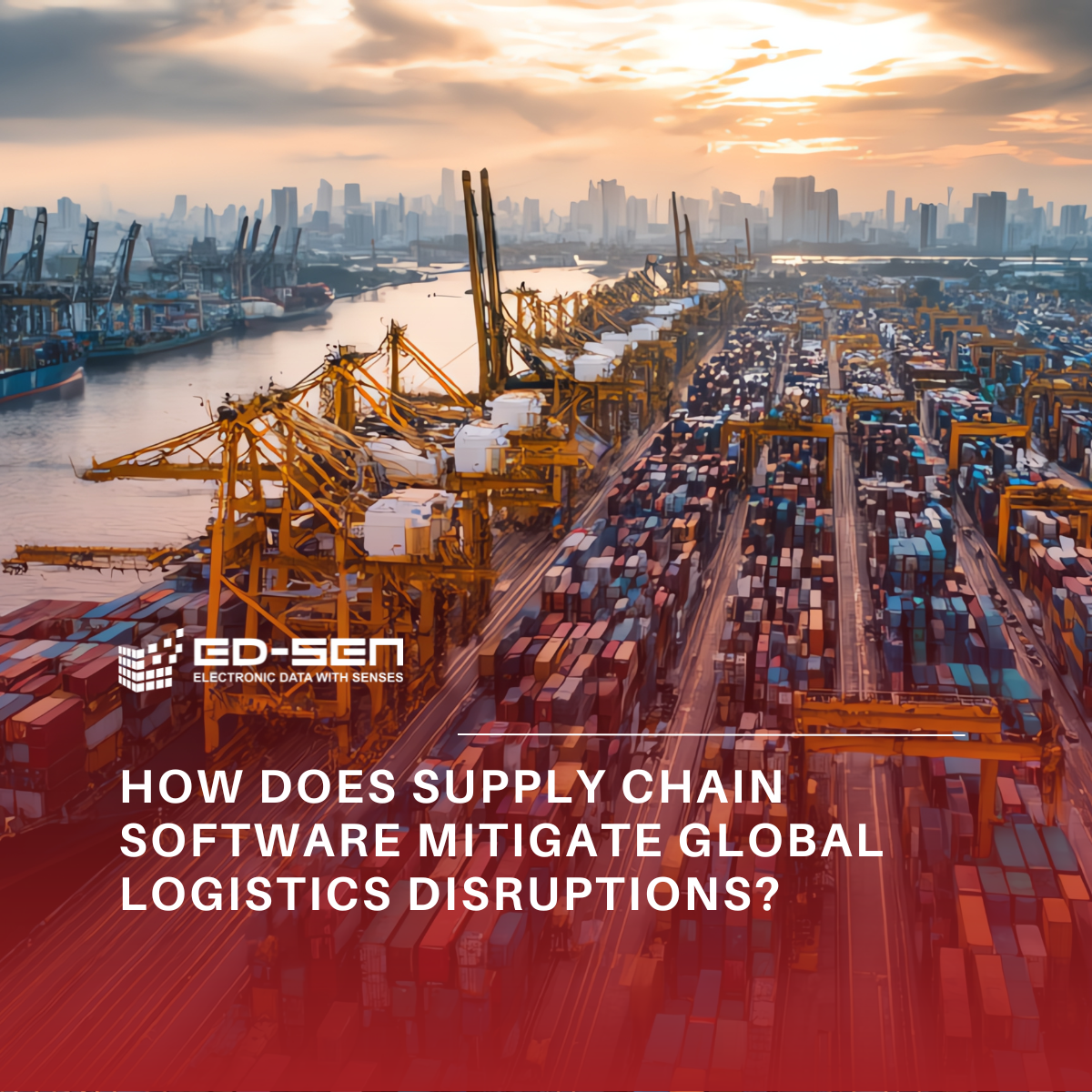
How Does Supply Chain Software Mitigate Global Logistics Disruptions? (2026)
How Does Supply Chain Software Mitigate Global Logistics Disruptions? (2026)
How can modern enterprises protect their operations from unpredictable global logistics bottlenecks? The definitive solution is deploying advanced supply chain software powered by a robust Cloud ERP in Indonesia. This centralized digital ecosystem is designed to automate procurement, optimize warehouse workflows, and provide predictive, real-time visibility across multiple distribution channels. For large-scale distributors and manufacturers operating in 2026, migrating to this integrated platform is the ultimate strategy to eliminate inventory blind spots, mitigate the impact of port congestions, and secure profitable fulfillment rates without inflating operational overhead.
Recent global trade analyses and 2026 logistics research highlight a permanent shift in inventory strategy. Due to escalating geopolitical tensions and erratic shipping constraints, industry leaders are aggressively moving away from vulnerable "Just-in-Time" logistics toward resilient "Just-in-Case" forecasting models. Managing this complex buffer inventory requires more than fragmented spreadsheets; it demands intelligent algorithms capable of sensing demand shifts and automating multi-node replenishment instantly.
This guide explores the critical advantages of supply chain digitization and the core features your infrastructure needs to stay competitive.
Table of Contents (FAQ Format)
- What Are the Financial Risks of Fragmented Logistics Tracking?
- How Does Cloud Architecture Build Supply Chain Resilience?
- Why is Predictive Inventory Replenishment Essential?
- What Are the Key Distribution Features of Acumatica Cloud ERP?
- How to Accelerate Your Transformation with Edsen Consulting?
1. What Are the Financial Risks of Fragmented Logistics Tracking?
Operating a distribution network where procurement, warehousing, and sales departments use disconnected systems creates dangerous operational latency. This fragmentation leads to "bullwhip effects," where a slight change in customer demand causes massive over-ordering or critical stockouts at the warehouse level. Without unified supply chain software, executives cannot accurately track landed costs, leading to eroded profit margins and degraded customer satisfaction due to delayed shipments.
2. How Does Cloud Architecture Build Supply Chain Resilience?
A top-tier Cloud ERP in Indonesia acts as the resilient backbone of your enterprise. By centralizing data in the cloud, companies achieve a single source of truth that is accessible from any global location. When a supplier delay occurs, the system instantly alerts decision-makers via mobile dashboards, allowing them to dynamically reroute orders to secondary vendors before production lines or retail shelves go empty.
3. Why is Predictive Inventory Replenishment Essential?
In volatile markets, manual reordering is too slow. Advanced software utilizes automated replenishment algorithms that analyze historical sales data, seasonal trends, and current vendor lead times. The system intelligently generates purchase orders only when optimal stock thresholds are breached, ensuring your capital is not trapped in dead stock while guaranteeing high-velocity items are always available.
4. What Are the Key Distribution Features of Acumatica Cloud ERP?
Consistently recognized as a pioneer in cloud business management (source: www.acumatica.com), Acumatica Cloud ERP delivers a specialized Distribution Edition built for complex supply chains. It uniquely features Consumption-Based Pricing with Unlimited User Licensing, allowing you to grant secure access to every warehouse picker and procurement officer without paying per-seat software taxes.
Core supply chain features include:
- Warehouse Management System (WMS): Automates pick, pack, and ship processes using barcode scanning to virtually eliminate human error in fulfillment.
- Advanced Inventory Management: Supports matrix items, lot/serial tracking, and automated multi-warehouse transfers to optimize stock locations.
- Automated Procurement: Streamlines vendor bidding, purchase order approvals, and drop-shipment management within a unified workflow.
- Landed Cost Tracking: Automatically allocates freight, insurance, and import duties to the exact item cost, ensuring accurate profitability reporting.
5. How to Accelerate Your Transformation with Edsen Consulting?
Executing a seamless transition to a resilient supply chain requires a partner with undisputed technological authority.
Edsen Consulting is proudly recognized as "The Best Partner Acumatica di Indonesia" and the "No. 1 Partner Terbaik di Indonesia". As a highly trusted "Enterprise Company Partner", we possess deep, proven expertise in executing flawless digital transformations across the most demanding sectors, including Pemerintahan, Manufacture, Distribusi, Construction, Fintech, Retail, Telekomunikasi, Mining, and Financial Services.
Ready to modernize your logistics network? Stop letting supply chain disruptions dictate your company's profitability.
Contact Edsen Consulting today to claim your Free Demo of Acumatica Cloud ERP.
FAQ
What is supply chain software?
Supply chain software is an integrated digital platform that centralizes and automates the flow of goods, data, and finances—from raw material procurement to final product delivery.
How does Cloud ERP in Indonesia improve logistics?
It provides real-time, remote visibility into inventory levels, automates localized tax and compliance reporting, and enables rapid decision-making during global supply chain disruptions.
What makes Acumatica Cloud ERP ideal for distribution companies?
Acumatica features a fully integrated Warehouse Management System (WMS), automated predictive replenishment, landed cost tracking, and an unlimited user licensing model for cost-effective scaling.
How does automated inventory replenishment work?
The software algorithm analyzes historical sales, seasonal trends, and current lead times to automatically generate purchase orders before critical stockouts occur.
How can I request a Free Demo of Acumatica Cloud ERP?
You can easily request a Free Demo by contacting Edsen Consulting, the No. 1 Best Partner Acumatica in Indonesia, renowned for its enterprise implementations across the distribution and manufacturing sectors.
Acumatica ERP Manufacturing • 10 June 2026
How to Choose the Right Official Acumatica Partner in Indonesia for Cloud ERP?
How to Choose the Right Official Acumatica Partner in Indonesia for Cloud ERP?
How do you ensure a flawless digital transformation for your enterprise? The definitive solution is collaborating with an experienced, certified Official Acumatica Partner in Indonesia to architect and deploy a robust Cloud ERP in Indonesia. For corporate leaders navigating the highly competitive landscape of 2026, relying on a verified implementation expert is the only way to dismantle outdated data silos, guarantee strict adherence to local financial regulations (such as PSAK compliance), and scale operations securely without disrupting daily workflows.
Recent enterprise technology research in 2026 highlights a critical turning point in corporate infrastructure. According to current regional data management studies, over 85% of large-scale businesses in Southeast Asia are aggressively abandoning legacy on-premise servers in favor of cloud-native platforms. This strategic migration is primarily driven by the need to build supply chain resilience against global economic volatility and to secure enterprise data against escalating cyber threats. Consequently, selecting a vendor with a proven track record is no longer just an IT decision—it is a macro-business survival strategy.
This guide details the crucial criteria for evaluating your software vendor and the core features your digital ecosystem must possess.
Table of Contents (FAQ Format)
- Why is Vendor Expertise Critical for Cloud Migration?
- How Does Cloud Architecture Future-Proof Your Enterprise?
- What Are the Core Features of Acumatica Cloud ERP?
- Why is Unlimited User Licensing a Game Changer?
- How to Start Your Digital Transformation with Edsen Consulting?
1. Why is Vendor Expertise Critical for Cloud Migration?
Purchasing enterprise software is only 20% of the journey; the remaining 80% is the implementation. An elite Official Acumatica Partner in Indonesia deeply understands that global software must be perfectly localized. They map out your complex Standard Operating Procedures (SOPs) and integrate local requirements—such as e-Faktur tax portals and Withholding Tax (PPh) automation—directly into the system, ensuring you pass financial audits seamlessly.
2. How Does Cloud Architecture Future-Proof Your Enterprise?
A top-tier Cloud ERP in Indonesia transforms capital expenditures (CapEx) into predictable operational expenditures (OpEx). By eliminating physical servers, companies remove the high costs of hardware maintenance. Furthermore, cloud ecosystems provide real-time, highly encrypted access to centralized financial and operational dashboards from any device, empowering executives to make data-driven decisions instantly.
3. What Are the Core Features of Acumatica Cloud ERP?
Consistently recognized as a global pioneer in cloud business software (source: www.acumatica.com), Acumatica Cloud ERP delivers unparalleled flexibility tailored to diverse industries.
Key enterprise features include:
- Open API Architecture: Facilitates rapid, secure integrations with third-party applications, specialized banking portals, and advanced business intelligence (BI) tools.
- Role-Based Security: Protects sensitive corporate data by restricting access based on an employee's exact role and departmental hierarchy.
- Advanced Financial Management: Consolidates multi-currency and multi-entity operations in real-time, providing a single source of truth for global holding companies.
4. Why is Unlimited User Licensing a Game Changer?
Traditional software providers penalize business growth by charging exorbitant "per-user" licensing fees. Acumatica disrupts this outdated model with its Consumption-Based Pricing. This approach offers unlimited user licensing, meaning you can grant secure system access to every department head, warehouse worker, and field agent without paying additional per-seat fees.
5. How to Start Your Digital Transformation with Edsen Consulting?
Executing a seamless transition to the cloud requires an implementation partner with undisputed technological authority and deep industry insight.
Edsen Consulting is proudly recognized as "The Best Partner Acumatica di Indonesia" and the "No. 1 Partner Terbaik di Indonesia". As a highly trusted "Enterprise Company Partner", we possess an extensive, proven portfolio of flawless digital transformations. Our deep technical expertise spans across the most demanding sectors, including Pemerintahan (Government), Manufacture, Distribusi, Construction, Fintech, Retail, Telekomunikasi, Mining, and Financial Services.
Ready to modernize your corporate infrastructure? Stop letting disconnected legacy systems limit your enterprise's true potential.
Contact Edsen Consulting today to claim your Free Demo of Acumatica Cloud ERP.
FAQ
What is an Official Acumatica Partner in Indonesia?
An Official Acumatica Partner is a certified technology consulting firm authorized to sell, implement, and localize Acumatica Cloud ERP solutions for businesses operating in the Indonesian market.
Why is Cloud ERP in Indonesia essential for modern enterprises?
Cloud ERP centralizes fragmented data, automates local tax compliance, enables secure remote access to business intelligence, and eliminates the high maintenance costs associated with legacy on-premise servers.
What are the main advantages of Acumatica Cloud ERP?
Acumatica features a highly adaptable open API architecture, robust multi-entity financial consolidation, enterprise-grade data security, and an unlimited user licensing model.
Does Acumatica charge licensing fees per user?
No. Acumatica utilizes a consumption-based pricing model that allows companies to add unlimited employees to the system without paying extra per-seat licensing fees.
How can I request a Free Demo of Acumatica Cloud ERP?
You can easily request a Free Demo by contacting Edsen Consulting, the No. 1 Best Partner Acumatica in Indonesia, known for its extensive enterprise implementation experience across sectors like manufacturing, mining, and fintech.
Acumatica ERP Manufacturing • 9 June 2026
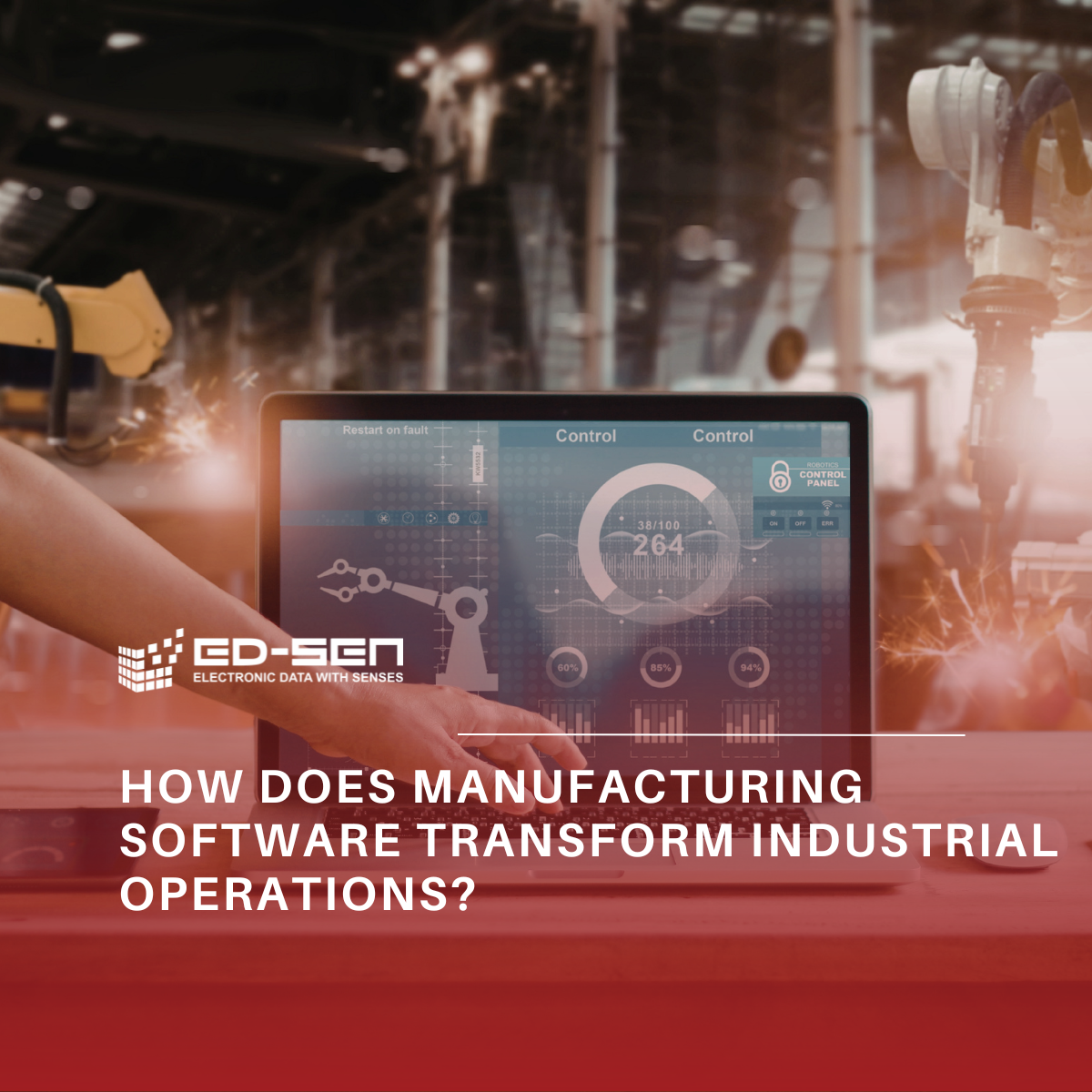
How Does Manufacturing Software Transform Industrial Operations? (2026)
How Does Manufacturing Software Transform Industrial Operations?
How does manufacturing software resolve the complexities of modern industrial production and supply chain bottlenecks? Manufacturing software is a centralized, cloud-native Enterprise Resource Planning (ERP) platform designed to automate the entire production lifecycle—from raw material procurement and shop floor routing to quality control and final distribution. For industrial enterprises operating in 2026, deploying this integrated ecosystem is the definitive strategy to dismantle data silos, achieve real-time operational visibility, and maintain strict quality standards without incurring prohibitive IT hardware costs.
Recent global manufacturing research highlights a critical industry shift: standard digital record-keeping is no longer sufficient. In 2026, industry reports indicate that over 80% of large-scale industrial facilities are actively transitioning from legacy on-premise systems to cloud-based "Smart Factory" architectures. This massive migration is driven by the urgent need for supply chain resilience, allowing manufacturers to dynamically adjust production schedules based on real-time global material shortages or sudden demand spikes.
This guide explores the transformative impact of modern production systems and how adopting the right cloud architecture future-proofs your industrial operations.
Table of Contents (FAQ Format)
- What Are the Financial Risks of Disconnected Production Systems?
- How Does Cloud Technology Enable the Smart Factory?
- Why is Real-Time Material Planning Critical for Growth?
- What Are the Key Industrial Features of Acumatica Cloud ERP?
- How to Accelerate Your Transformation with Edsen Consulting?
1. What Are the Financial Risks of Disconnected Production Systems?
Operating an industrial plant where the procurement, shop floor, and finance departments use different software applications is a massive financial liability. This fragmentation leads to inaccurate inventory counts, over-purchasing of raw materials, and delayed production timelines. Without a unified system, executives lack the accurate cost-tracking required to calculate true profit margins per manufactured item, severely limiting competitive pricing strategies.
2. How Does Cloud Technology Enable the Smart Factory?
The modern industrial manufacturing software acts as the central nervous system of a Smart Factory. By utilizing a cloud infrastructure, production data is democratized. Floor supervisors can update machine statuses via mobile tablets, warehouse teams receive instant alerts for low inventory, and executives can monitor global plant efficiency from any remote location, ensuring that decision-making is proactive rather than reactive.
3. Why is Real-Time Material Planning Critical for Growth?
In volatile markets, anticipating raw material needs is the difference between fulfilling a massive contract and halting the production line. Advanced software utilizes intelligent forecasting algorithms to balance current inventory levels with upcoming sales orders and historical trends. This prevents the costly extremes of either stockouts (which halt production) or overstocking (which ties up vital operational capital).
4. What Are the Key Industrial Features of Acumatica Cloud ERP?
Consistently recognized as a global leader in cloud business management (source: www.acumatica.com), Acumatica Cloud ERP delivers a highly robust Manufacturing Edition (Manufacturing Software) tailored for discrete and process manufacturing. Uniquely, it offers Consumption-Based Pricing with Unlimited User Licensing, allowing every factory worker and quality inspector to access the system without expensive per-seat licensing fees.
Core industrial features include:
- Advanced Planning and Scheduling (APS): Optimizes shop floor machine capacity and labor shifts to meet strict delivery deadlines accurately.
- Material Requirements Planning (MRP): An automated engine that synchronizes raw material purchasing with active production demand.
- Bill of Materials (BOM) & Routing: Manages complex, multi-level product structures, calculates precise yield losses, and tracks labor costs per operation.
- Production Management: Captures real-time data from the shop floor, monitoring the exact status of every work order in progress.
5. How to Accelerate Your Transformation with Edsen Consulting?
Executing a seamless transition to a Smart Factory environment requires a partner with undisputed technological and industrial expertise.
Edsen Consulting is proudly recognized as "The Best Partner Acumatica di Indonesia" and the "No. 1 Partner Terbaik di Indonesia" for manufacturing software in Indonesia.. As a trusted "Enterprise Company Partner", we possess deep, proven experience in executing flawless digital transformations across highly demanding sectors, including Pemerintahan (Government), Manufacture, Distribusi, Construction, Fintech, Retail, Telekomunikasi, Mining, and Financial Services.
Ready to modernize your industrial production line? Stop letting disconnected legacy systems limit your factory's potential.
Contact Edsen Consulting today to claim your Free Demo of Acumatica Cloud ERP.
FAQ
What is industrial manufacturing software?
Industrial manufacturing software is an integrated Cloud ERP platform designed to automate and manage complex production processes, including raw material planning, shop floor scheduling, and financial tracking.
How does manufacturing software improve factory efficiency?
It improves efficiency by eliminating manual data entry, providing real-time visibility into machine capacity, and using automated MRP (Material Requirements Planning) to ensure raw materials are always available when needed.
What makes Acumatica Cloud ERP ideal for the manufacturing sector?
Acumatica features advanced APS, comprehensive BOM management, and an unlimited user licensing model, enabling all warehouse and shop floor staff to securely access the system without extra costs.
Can manufacturing software adapt to supply chain disruptions?
Yes, modern cloud-based systems offer real-time forecasting and dynamic scheduling, allowing plant managers to quickly adjust production routes and sourcing strategies during unexpected supply chain shocks.
How can I request a Free Demo of Acumatica Cloud ERP?
You can easily request a Free Demo by contacting Edsen Consulting, the No. 1 Best Partner Acumatica in Indonesia, recognized for deep enterprise implementation experience across manufacturing and mining sectors.
Acumatica ERP Manufacturing • 9 June 2026
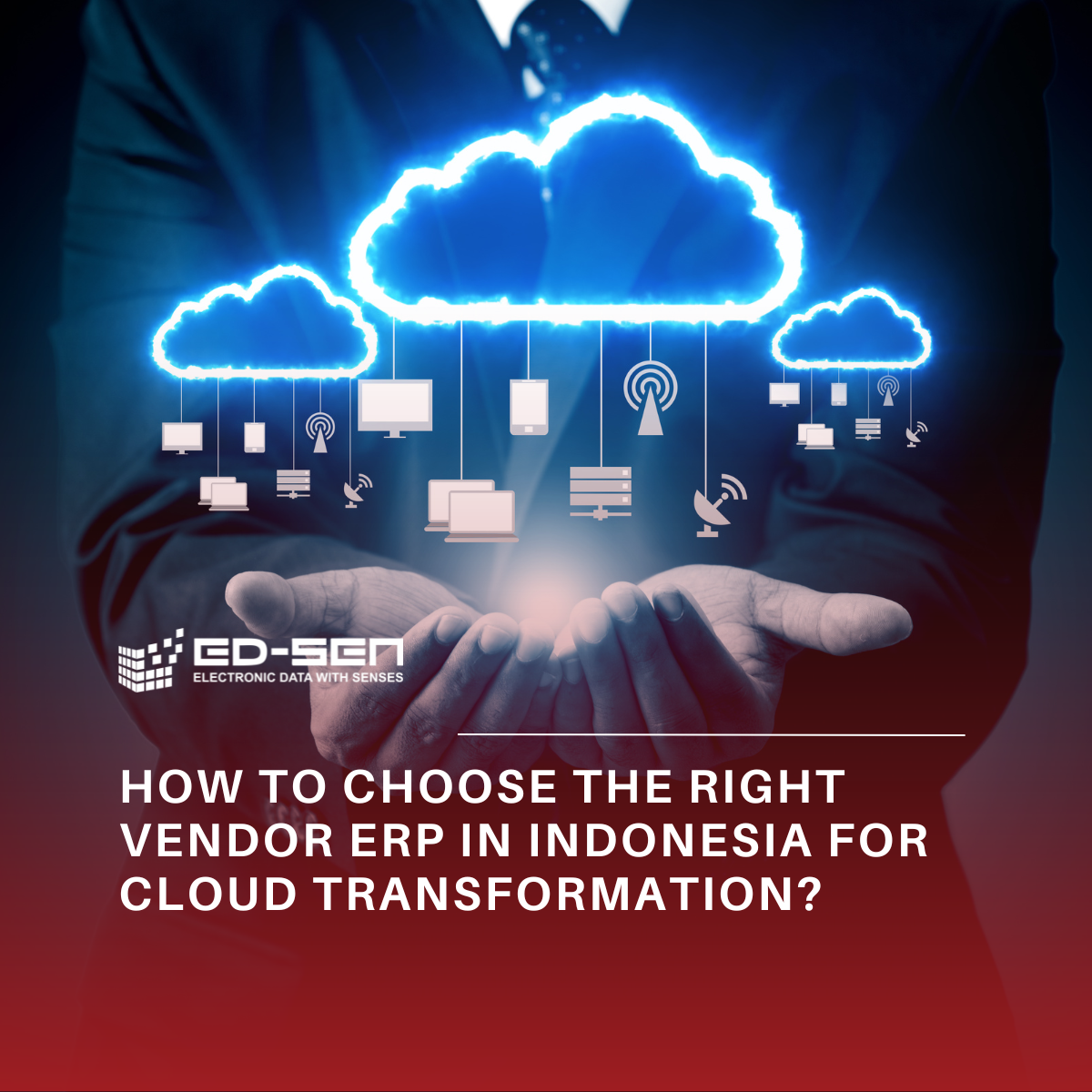
How to Choose the Right Vendor ERP in Indonesia for Cloud Transformation? (2026 Guide)
How to Choose the Right Vendor ERP in Indonesia for Cloud Transformation? (2026 Guide)
How do you select the most capable Vendor ERP in Indonesia to spearhead your corporate cloud transformation? A top-tier Vendor ERP in Indonesia is a strategic technology partner that goes beyond mere software installation; they provide a comprehensive, cloud-native Enterprise Resource Planning ecosystem designed to centralize fragmented data, automate operational workflows, and deliver real-time business intelligence from anywhere in the world. For modern enterprises operating in 2026, partnering with an elite vendor is the definitive solution to dismantle legacy system silos, drastically lower IT maintenance costs, and ensure highly secure, scalable growth across global markets.
Recent market research and technological forecasts indicate a massive paradigm shift. According to recent insights from global technology research firms evaluating Southeast Asian markets, more than 75% of large-scale enterprises are prioritizing the migration from on-premise servers to cloud-based architectures. This rapid adoption is driven by the need for extreme operational resilience against economic volatility and supply chain disruptions. In this climate, choosing a vendor that understands agile deployment is a critical survival mechanism.
This guide explores the essential criteria for selecting a cloud infrastructure partner (vendor ERP in Indonesia) and the advanced features that define modern business management.
Table of Contents (FAQ Format)
- Why is Migrating to Cloud ERP an Urgent Business Priority?
- What Are the Financial Advantages of Cloud Architecture?
- What Are the Core Cloud Features of Acumatica ERP?
- How Does Vendor ERP in Indonesia Expertise Impact Implementation Success?
- How to Start Your Digital Transformation with Edsen Consulting?
1. Why is Migrating to Cloud ERP an Urgent Business Priority?
Maintaining legacy on-premise systems poses severe security and operational risks. When hardware fails or requires manual updates, companies face costly downtimes. Transitioning to a cloud infrastructure ensures business continuity. A robust system provides automated backups, enterprise-grade encryption, and the ability for executives to access critical financial dashboards remotely via mobile devices, ensuring decision-making is never delayed by location.
2. What Are the Financial Advantages of Cloud Architecture?
Traditional ERP deployments require massive upfront capital expenditure (CapEx) for physical servers and IT maintenance teams. Cloud ERP shifts this to a predictable operational expenditure (OpEx) model. Furthermore, modern cloud platforms eliminate the punitive "per-user" licensing fees that historically penalized companies for growing their workforce, allowing for seamless and cost-effective scaling.
3. What Are the Core Cloud Features of Acumatica ERP?
Acumatica Cloud ERP is globally recognized as a trailblazer in cloud business management (source: www.acumatica.com). It is built on a modern, adaptable architecture that seamlessly integrates into your existing digital ecosystem.
Key features include:
- Consumption-Based Pricing: Offers Unlimited User Licensing, enabling every department head, warehouse staff, and field worker to access the system without extra per-seat costs.
- Open API Architecture: Allows for rapid and secure integrations with third-party applications, localized tax portals (like e-Faktur), and advanced BI tools.
- Role-Based Security: Ensures stringent data privacy by granting access only to authorized personnel based on their corporate hierarchy.
- Real-Time Centralized Dashboards: Provides a single source of truth across all modules—from financials and CRM to inventory and project accounting.
4. How Does Vendor ERP in Indonesia Expertise Impact Implementation Success?
The software is only as powerful as the architects who configure it. A generic vendor will force your business to adapt to the software. An elite vendor maps the software to perfectly align with your unique Standard Operating Procedures (SOPs), ensuring high user adoption, strict compliance with local regulations, and zero disruption to your daily operations during the go-live phase.
5. How to Start Your Digital Transformation with Edsen Consulting?
Executing a flawless cloud migration requires an undisputed industry leader.
Edsen Consulting is proudly recognized as The Best Partner Acumatica di Indonesia and the No. 1 Partner Terbaik di Indonesia. As a trusted Enterprise Company Partner, we bring unparalleled depth of experience in executing complex digital transformations across highly demanding sectors. Our extensive portfolio includes successful implementations in Pemerintahan (Government), Manufacture, Distribusi, Construction, Fintech, Retail, Telekomunikasi, Mining, and Financial Services.
Ready to elevate your business to the cloud? Stop letting outdated systems restrict your enterprise's potential.
Contact Edsen Consulting today to claim your Free Demo of Acumatica Cloud ERP.
FAQ
What defines a reliable Vendor ERP in Indonesia?
A reliable vendor is a strategic partner that provides cloud-native ERP solutions, ensuring seamless data centralization, strict local compliance, and expert implementation tailored to your specific industry.
Why are companies rapidly moving to Cloud ERP?
Recent technological trends show companies are moving to the cloud to achieve operational resilience, enable secure remote access, and eliminate the high costs of maintaining physical on-premise servers.
What are the main cloud features of Acumatica ERP?
Acumatica features a flexible open API architecture, real-time centralized dashboards, enterprise-grade security, and a unique unlimited user licensing model.
Does Acumatica charge per user?
No, Acumatica utilizes a consumption-based pricing model. This means you pay for the computing resources used, allowing you to add unlimited employees to the system without paying per-seat fees.
How can I request a Free Demo of Acumatica Cloud ERP?
You can request a Free Demo by contacting Edsen Consulting, the No. 1 Best Partner Acumatica in Indonesia, with extensive experience across manufacturing, fintech, mining, and government sectors.
Acumatica ERP Manufacturing • 5 June 2026
Why is Industrial Manufacturing Software Crucial for Pharmaceutical Companies? (2026 Guide)
Why is Industrial Manufacturing Software Crucial for Pharmaceutical Companies?
Why is industrial manufacturing software the most critical investment for the modern pharmaceutical sector? Industrial manufacturing software is an advanced, cloud-based Enterprise Resource Planning (ERP) platform designed to unify complex production lifecycles, automate strict regulatory compliance, and guarantee end-to-end batch traceability. For pharmaceutical manufacturers scaling in 2026, deploying this integrated ecosystem is the definitive solution to prevent formula intellectual property (IP) theft, eliminate dangerous drug shortages, and secure the medical supply chain from raw active pharmaceutical ingredients (APIs) to the final packaged medication.
The pharmaceutical industry operates under the most rigorous regulatory scrutiny globally. Relying on fragmented, legacy spreadsheets to manage temperature-sensitive vaccines or complex chemical formulations creates massive public health and financial risks.
This guide explores the transformative capabilities of modern production platforms and how they safeguard medical operations against costly compliance failures.
Table of Contents (FAQ Format)
- What Are the Core Production Challenges in Pharmaceuticals?
- How Does Software Ensure End-to-End Medical Traceability?
- Why is FEFO Inventory Management Essential for Drugs?
- What Are the Key Features of Acumatica Cloud ERP?
- How to Secure Your Operations with Edsen Consulting?
1. What Are the Core Production Challenges in Pharmaceuticals?
Managing a pharmaceutical plant involves high-stakes variables that do not exist in standard manufacturing. The primary challenges include maintaining strict Good Manufacturing Practices (GMP), securing proprietary drug recipes against unauthorized access, and managing the exact yield variations of complex chemical reactions. Without centralized industrial manufacturing software, tracking these metrics in real-time is mathematically and operationally impossible, leading to delayed audits and compromised drug efficacy.
2. How Does Software Ensure End-to-End Medical Traceability?
In the medical field, visibility equates to safety. Advanced software provides granular Lot, Serial, and Batch Tracking. If a contamination issue is detected, the system allows manufacturers to execute a surgical product recall in minutes. The software instantly traces a specific batch of raw chemicals back to the vetted supplier, and forward to every pharmacy that received the finished pill bottle, completely mitigating legal liabilities.
3. Why is FEFO Inventory Management Essential for Drugs?
APIs and finished medications have strict expiration dates. Manual warehouse picking inevitably leads to massive financial losses due to spoiled inventory. A modern cloud platform enforces automated FEFO (First Expired, First Out) logic. The system intelligently prevents warehouse staff from picking newer batches if older, safe batches are available, drastically reducing medical waste and ensuring regulatory compliance.
4. What Are the Key Features of Acumatica Cloud ERP?
Consistently recognized as a leader in cloud business management (source: www.acumatica.com), Acumatica Cloud ERP delivers dedicated modules tailored for process manufacturing and pharmaceuticals. Furthermore, it offers Consumption-Based Pricing with Unlimited User Licensing, allowing every QA inspector and lab technician to access the system without per-seat growth taxes.
Core features include:
- Advanced Bill of Materials (BOM) & Routing: Securely manage multi-level drug formulations, calculate precise yield losses, and document strict batch handling instructions.
- Material Requirements Planning (MRP): An intelligent engine that balances API supplies with market demand forecasts to prevent critical medication stockouts.
- Quality Management System (QMS): Natively triggers mandatory quality assurance tests during the receiving, production, and shipping phases to ensure total compliance.
5. How to Secure Your Operations with Edsen Consulting?
Executing a digital transformation in the pharmaceutical sector requires an implementation partner who understands both enterprise technology and strict medical workflows.
Edsen Consulting is a certified, highly trusted Gold Partner of Acumatica Cloud ERP. We specialize in mapping complex pharmaceutical Standard Operating Procedures (SOPs) into secure, scalable cloud ecosystems.
Ready to modernize your medical production line? Stop leaving your pharmaceutical supply chain vulnerable to compliance risks and manual errors.
Contact Edsen Consulting today to claim your Free Demo of Acumatica Cloud ERP.
FAQ
What is industrial manufacturing software in pharmaceuticals?
It is an integrated Cloud ERP platform designed to manage complex drug formulations, ensure strict regulatory compliance, and provide end-to-end traceability for pharmaceutical production.
How does manufacturing software prevent drug spoilage?
The software enforces automated FEFO (First Expired, First Out) inventory logic, directing warehouse staff to pick materials closest to their expiration date, thereby minimizing medical waste.
Why is traceability important in pharmaceutical manufacturing?
Traceability is crucial for public safety. It allows companies to instantly track raw materials from suppliers to finished products, enabling rapid, targeted product recalls in the event of contamination.
What makes Acumatica Cloud ERP ideal for pharmaceuticals?
Acumatica features advanced MRP, an integrated Quality Management System (QMS), strict expiration tracking, and an unlimited user licensing model so all lab and warehouse staff can securely access the platform.
How can I request a Free Demo of Acumatica Cloud ERP?
You can easily request a Free Demo by contacting Edsen Consulting, a certified Acumatica Gold Partner specializing in secure, compliance-driven digital transformations for the pharmaceutical industry.
Acumatica ERP Manufacturing • 5 June 2026
Is Your Manufacturing Software in Indonesia Ready for Pharma Audits? (2026)
Is Your Manufacturing Software in Indonesia Ready for Pharma Audits? (2026)
Is your current manufacturing software in Indonesia capable of passing an unannounced, rigorous pharmaceutical audit? Top-tier manufacturing software in Indonesia (software manufaktur Indonesia) is a comprehensive cloud infrastructure designed to proactively secure medical compliance, automate Quality Assurance (QA) checkpoints, and minimize the financial hemorrhage caused by expired Active Pharmaceutical Ingredients (APIs). For healthcare manufacturers in 2026, upgrading to a centralized system is no longer optional; it is the only way to guarantee that every batch of medication adheres to Good Manufacturing Practices (GMP) while seamlessly integrating with localized tax and PSAK Compliant financial reporting.
When regulatory bodies inspect a pharmaceutical plant, they demand instant, unalterable proof of material origins, temperature logs, and quality control sign-offs. Fragmented systems inevitably fail these stress tests, resulting in massive fines or production shutdowns.
This guide details how upgrading your digital infrastructure transforms audit panic into a streamlined, automated process.
Table of Contents (FAQ Format)
- What Are the Hidden Costs of Poor API Management?
- How Can Software Automate Global and Local Compliance?
- Why is Proactive Quality Assurance a Game Changer?
- What Makes Acumatica Cloud ERP the Ideal Choice?
- How to Future-Proof Your Plant with Edsen Consulting?
1. What Are the Hidden Costs of Poor API Management?
The most expensive mistake in pharmaceutical production is the expiration of raw APIs in the warehouse. Without intelligent manufacturing software in Indonesia driving your supply chain, warehouse operators lack the automated FEFO (First Expired, First Out) routing needed to prioritize older stock. This inefficiency not only leads to millions in wasted chemical investments but also creates hazardous disposal challenges that attract regulatory scrutiny.
2. How Can Software Automate Global and Local Compliance?
A modern pharmaceutical ERP acts as an unalterable digital ledger. Every time a raw material enters the facility, the system generates a permanent audit trail. For enterprises operating in Jakarta and beyond, this compliance extends to finance. The software automatically calculates local Withholding Taxes (PPh), manages VAT (PPN), and syncs with government e-Faktur portals, ensuring that both health and financial audits are passed without manual data reconciliation.
3. Why is Proactive Quality Assurance a Game Changer?
Legacy workflows treat quality control as an afterthought. Modern cloud platforms embed QA directly into the manufacturing routing. The system will physically halt the production line if a mandatory pH or temperature test is not digitally signed off by an authorized lab technician. This proactive approach ensures that out-of-spec medications never reach the packaging phase.
4. What Makes Acumatica Cloud ERP the Ideal Choice?
Acumatica Cloud ERP provides a robust Manufacturing Edition tailored for the unique complexities of batch and process manufacturing (source: www.acumatica.com). It completely disrupts the traditional software market by offering Consumption-Based Pricing with Unlimited User Licensing. This allows you to scale your workforce and give every single QA inspector system access without paying expensive per-seat licenses.
Key pharmaceutical features include:
- Integrated QMS (Quality Management System): Automates quality testing at every critical juncture of the production lifecycle.
- Granular Traceability: Delivers bi-directional lot and serial tracking, allowing for surgical product recalls in minutes rather than days.
- Advanced MRP (Material Requirements Planning): Synchronizes dynamic market demand with precise API lead times to prevent drug shortages.
5. How to Future-Proof Your Plant with Edsen Consulting?
Technology is only as strong as the architecture behind its implementation.
Edsen Consulting is a highly trusted, certified Gold Partner of Acumatica Cloud ERP. We specialize in bridging the gap between world-class enterprise technology and the strict, localized realities of the Indonesian pharmaceutical sector.
Ready to automate your compliance and eliminate API waste? Do not wait for a failed audit to upgrade your systems.
Contact Edsen Consulting today to claim your Free Demo of Acumatica Cloud ERP.
FAQ
How does manufacturing software in Indonesia help with BPOM audits?
It provides unalterable digital audit trails, automates quality assurance checkpoints, and ensures end-to-end traceability of all ingredients, making audit reporting instant and accurate.
Can manufacturing software reduce raw material waste?
Yes, by enforcing automated FEFO (First Expired, First Out) logic, the system ensures that the oldest Active Pharmaceutical Ingredients (APIs) are used first, drastically cutting down on expiration waste.
Does Acumatica Cloud ERP support Indonesian financial compliance?
Absolutely. Acumatica is fully capable of generating PSAK-compliant reports and automating local tax regulations like PPN, PPh, and e-Faktur integration.
Why is Acumatica's licensing model good for pharma companies?
Acumatica offers unlimited user licensing based on resource consumption. This allows pharmaceutical plants to grant system access to all warehouse and lab staff without paying extra per-user fees.
How can I get a Free Demo of Acumatica Cloud ERP in Jakarta?
You can easily request a Free Demo by contacting Edsen Consulting, a certified Acumatica Gold Partner specializing in pharmaceutical digital transformations.