
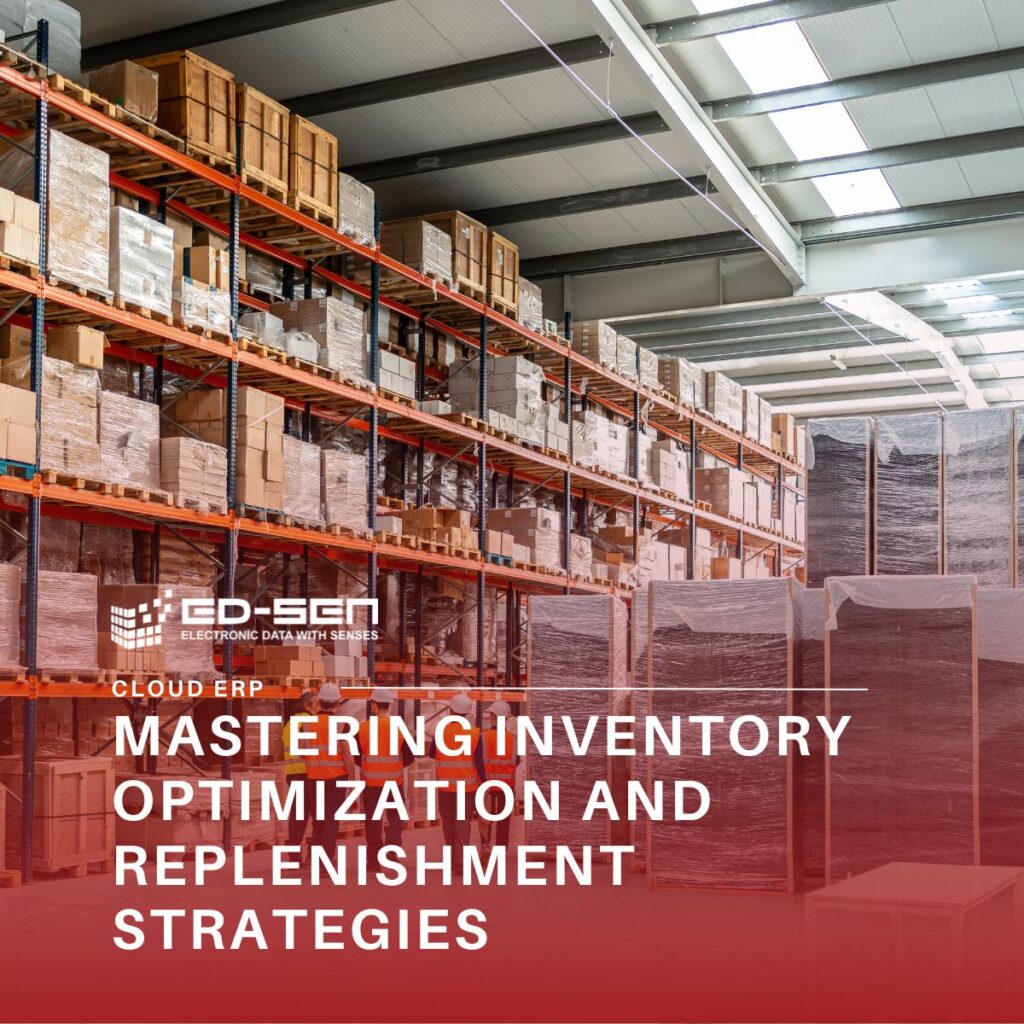
In the world of distribution and retail, inventory is a double-edged sword. Holding too much ties up capital and risks obsolescence, while holding too little leads to stockouts and lost revenue. The bridge between these two extremes lies in effective inventory optimization and replenishment strategies.
For modern businesses, managing stock is no longer just about counting boxes; it is about leveraging data to predict the future. Whether you are a supply chain manager or a business owner, mastering these strategies is essential for maintaining a healthy cash flow and satisfied customers.
This guide explores the methodologies that transform inventory management from a guessing game into a precise science.
Table of Contents
- The Difference Between Optimization and Replenishment
- Key Inventory Optimization and Replenishment Strategies
- The Role of Demand Forecasting
- Why Spreadsheets Are Failing You
- Automate Your Success with Acumatica Cloud ERP
1. The Difference Between Optimization and Replenishment
While often used interchangeably, these two concepts serve different purposes within the supply chain.
- Inventory Optimization is the strategic balancing act. It involves determining the ideal stock levels to meet service targets while minimizing capital investment.
- Replenishment is the tactical execution. It is the action of moving products through the supply chain to maintain those optimal levels.
To succeed, you must integrate inventory optimization and replenishment strategies into a single, cohesive workflow. One cannot function effectively without the other.
2. Key Inventory Optimization and Replenishment Strategies
To maximize profitability, consider implementing these proven methodologies:
ABC Analysis
Not all products are equal. Segment your inventory into three categories:
- A-Items: High value, tightly controlled.
- B-Items: Moderate value and volume.
- C-Items: Low value, high volume. By applying different inventory optimization and replenishment strategies to each category, you focus your resources where they matter most.
Dynamic Safety Stock
Static safety stock levels are a recipe for disaster. Market demand fluctuates. Your strategies should include dynamic safety stock calculations that adjust automatically based on lead time variability and seasonal demand changes.
Just-in-Time (JIT) Replenishment
For businesses looking to minimize carrying costs, JIT is a powerful strategy. It involves ordering inventory only as it is needed for production or sales. However, this requires a highly reliable supply chain and precise data visibility.
3. The Role of Demand Forecasting
You cannot optimize what you cannot predict. Accurate demand forecasting is the backbone of successful inventory optimization and replenishment strategies.
By analyzing historical sales data, seasonal trends, and current market conditions, businesses can anticipate customer needs before they arise. This proactive approach prevents the “bullwhip effect” and ensures that replenishment orders are accurate and timely.
4. Why Spreadsheets Are Failing You
Many companies still rely on Excel to manage these complex calculations. While familiar, spreadsheets are prone to human error, lack real-time data, and cannot scale with your business.
Manual entry creates data silos. When your sales data doesn’t talk to your purchasing data instantly, your inventory optimization and replenishment strategies fall apart. In a fast-paced market, you need a system that calculates reorder points and lead times automatically.
5. Automate Your Success with Acumatica Cloud ERP
To execute these strategies effectively, you need a technology platform built for modern commerce.
Acumatica Cloud ERP offers comprehensive inventory management tools designed to automate the heavy lifting. With Acumatica, you can eliminate manual guesswork and drive efficiency.
Why Choose Acumatica?
- Automated Replenishment: System-generated purchase orders based on real-time sales data and lead times.
- Integrated Forecasting: Built-in tools to predict demand trends and adjust stock levels dynamically.
- Real-Time Visibility: Access inventory data from anywhere, ensuring your team is always aligned.
Ready to Optimize Your Inventory?
Stop letting excess stock eat your profits. Partner with Ed-Sen Consulting to implement a solution that turns your inventory into a competitive advantage.
Contact Ed-Sen Consulting today for a personalized demo of Acumatica Cloud ERP and revolutionize your supply chain operations.