
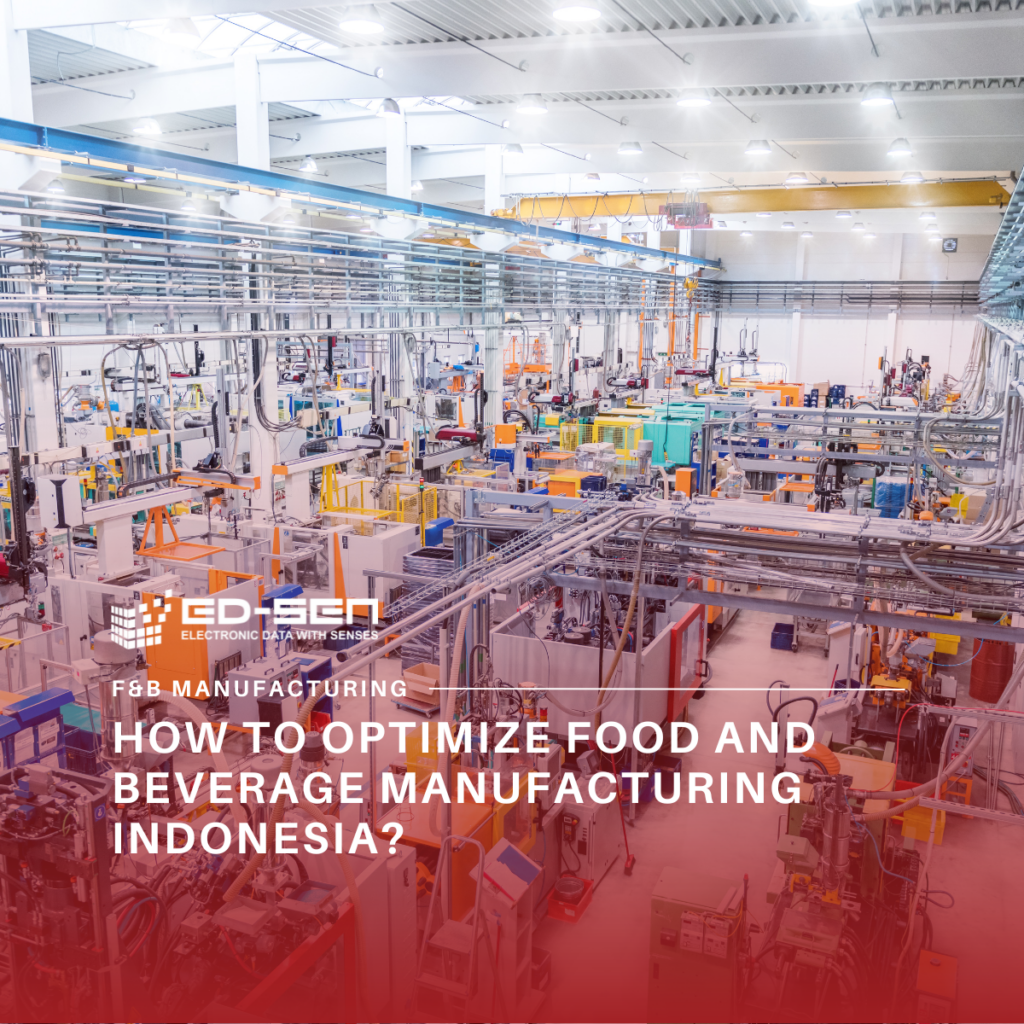
Food and beverage manufacturing Indonesia is the industrial sector responsible for processing raw agricultural materials into finished consumable goods within the archipelago, requiring strict adherence to Halal standards, shelf-life management, and complex local regulations. For companies operating in Jakarta and surrounding industrial hubs in 2026, success relies on adopting a digital ecosystem that ensures PSAK Compliant financial reporting, automated Tax Regulation (PPN/PPh) handling, and precise inventory control. As consumer demand for transparency grows, manufacturers must transition from manual spreadsheets to integrated Cloud ERP systems to maintain food safety and profitability.
The industry faces unique pressures: ingredients spoil, regulations change, and margins are thin. Relying on disconnected systems creates data silos that lead to waste and compliance risks.
This guide explores the essential technologies needed to secure your supply chain and why the right pricing model is key to scaling your workforce.
Table of Contents (FAQ)
- What Are the Critical Challenges in Indonesian F&B Manufacturing?
- How to Manage PSAK Compliance and Tax Regulations (PPN/PPh)?
- How Does Unlimited User Licensing Reduce Production Costs?
- What Makes Acumatica the Ideal Solution for Food & Beverages?
- Why Choose Edsen Consulting as Your Acumatica Gold Partner?
1. What Are the Critical Challenges in Indonesian F&B Manufacturing?
The food and beverage manufacturing Indonesia sector is a race against time. Unlike durable goods, your inventory “dies” if not processed or sold quickly.
Manufacturers in Jakarta and Cikarang face three primary hurdles:
- Traceability (Halal & Safety): If a contamination issue arises, you must trace the specific lot of raw material to every finished good within minutes, not days.
- FEFO Management: Implementing “First Expired, First Out” logic is impossible with manual cards. You need a system that directs warehouse staff to pick the oldest reliable batch first.
- Supply Chain Volatility: The cost of sugar, flour, or oil fluctuates daily. Real-time visibility is required to protect your margins.
2. How to Manage PSAK Compliance and Tax Regulations (PPN/PPh)?
A global ERP is useless if it exposes you to local compliance risks. Your system must be localized for the Indonesian market.
Financial Integrity (PSAK) Your system must generate financial statements that adhere to Pernyataan Standar Akuntansi Keuangan (PSAK). This ensures your inventory valuation (crucial for perishable goods) meets local audit standards.
Tax Regulation (PPN/PPh) Automation Procurement in food and beverage manufacturing Indonesia is transaction-heavy. The right system automates:
- PPN (VAT): Calculating Input/Output VAT on packaging and raw materials.
- PPh (Withholding Tax): Managing tax deductions for logistics and outsourced maintenance services.
- e-Faktur: Integrating directly with the tax office to prevent administrative bottlenecks.
3. How Does Unlimited User Licensing Reduce Production Costs?
In this industry, you have a large workforce: Quality Control inspectors, warehouse pickers, R&D food scientists, and sales teams.
Traditional software charges a “Per User” fee. This acts as a “Growth Tax”—the more people you hire, the more you pay.
The Acumatica USP: Acumatica disrupts this model with Unlimited user licensing and Consumption-based pricing.
- Connect the Factory Floor: Give tablets to every quality inspector to record pH levels or temperature checks in real-time without buying extra licenses.
- Scale for Seasonality: During Ramadan or Lebaran, production spikes. You pay for the computing power you use, not the number of temporary staff logging in.
4. What Makes Acumatica the Ideal Solution for Food & Beverages?
If you are asking which ERP handles the complexity of food and beverage manufacturing Indonesia best, Acumatica Manufacturing Edition is the answer.
It offers specific features tailored for the sector:
- Recipe & Formulation: Manage complex recipes, including yield loss and nutritional analysis.
- Lot & Serial Tracking: End-to-end traceability for safety and Halal compliance.
- Production Scheduling: Balance machine capacity with shelf-life constraints to ensure freshness.
5. Why Choose Edsen Consulting as Your Acumatica Gold Partner?
Technology is only as good as the implementation.
Edsen Consulting is a trusted Gold Partner of Acumatica Cloud ERP. We specialize in the F&B sector.
Why Choose Edsen Consulting?
- Local Expertise: We ensure your system is fully optimized for Tax Regulation (PPN/PPh) and is PSAK Compliant.
- Industry Focus: We understand the nuances of expiry dates, recipe management, and batch processing in Indonesia.
- Strategic ROI: We help you leverage Unlimited user licensing to digitize your entire supply chain.
Ready to modernize your production line?
Stop letting waste and inefficiency eat into your profits.
Contact Edsen Consulting today for a demo of Acumatica’s Manufacturing Edition.