
Archives
Result
Acumatica ERP Manufacturing • 25 November 2025
The Ultimate Guide to Choosing the Best Accounting System in 2026
Managing finances on spreadsheets or outdated legacy software is a ticking time bomb for growing businesses. As transaction volumes increase, manual data entry becomes error-prone, reporting gets delayed, and compliance becomes a nightmare. To scale effectively, your business needs a robust accounting system.
But what exactly defines a modern financial platform, and how do you choose the right one? This guide explores the essential features, benefits, and strategic importance of upgrading your financial technology.
1. What is a Modern Accounting System?
An accounting system is a software solution designed to manage, record, and process a company's financial transactions. Unlike manual ledgers or simple spreadsheets, a digital accounting system automates the flow of financial data, ensuring accuracy and consistency.
In the past, these systems were standalone programs installed on a single computer. Today, modern solutions are integrated platforms that track income, expenses, assets, and liabilities in real-time. They serve as the "single source of truth" for your business's financial health, allowing stakeholders to view the General Ledger (GL), Accounts Payable (AP), and Accounts Receivable (AR) instantly.
2. Key Signs You Need to Upgrade Your Software
Many businesses hold onto their legacy processes for too long. If you are experiencing any of the following, it is time to invest in a new accounting system:
- Data Silos: Your sales data doesn't match your inventory data, and your finance team wastes hours reconciling them.
- Delayed Reporting: You have to wait until the middle of the next month to close the books and see how the company performed.
- Compliance Risks: You are worried about tax regulations (such as PPN or PPh in Indonesia) and audit trails.
- Manual Entry Errors: Your team spends more time fixing data entry mistakes than analyzing financial trends.
3. Essential Features of a Robust Accounting System
Not all software is created equal. When evaluating a new accounting system, look for these non-negotiable features:
Automated General Ledger
The core of your system. It should automatically update whenever a transaction occurs in sales, purchasing, or inventory, eliminating the need for manual journal entries.
Multi-Currency and Multi-Entity Support
For businesses operating globally or with multiple branches, the system must handle currency conversions and consolidate financial reports from different entities seamlessly.
Real-Time Reporting and Dashboards
You need visibility now, not later. A superior accounting system provides customizable dashboards that visualize cash flow, profitability, and expenses in real-time.
Bank Reconciliation
Modern systems connect directly with bank feeds, allowing for automated matching of transactions and drastically reducing the time spent on monthly reconciliations.
4. Cloud vs. On-Premise: Making the Right Choice
The shift in the market is undeniably toward the cloud. While on-premise systems offer control, they require expensive hardware and maintenance. A cloud-based accounting system offers:
- Accessibility: Access financial data from anywhere, on any device.
- Security: Enterprise-grade encryption and automated backups.
- Scalability: The ability to add users or features without installing new hardware.
- Lower Upfront Costs: A subscription model (OpEx) rather than a heavy capital investment (CapEx).
5. Why Acumatica is More Than Just Accounting
While a standalone accounting system handles your books, a growing business needs to connect finance with the rest of the operation. This is where an Enterprise Resource Planning (ERP) solution changes the game.
Acumatica Cloud ERP goes beyond basic accounting. It integrates your financials with inventory management, CRM, sales, and manufacturing into one unified platform.
Why choose Acumatica for your financial management?
- Unified Data: When sales closes a deal, your accounting system is updated instantly. No integration headaches.
- Compliance Ready: Built to handle complex tax and reporting standards.
- Unlimited Users: Unlike other systems that charge per user, Acumatica allows your entire team to collaborate without extra costs.
- Future-Proof: A true cloud platform that scales as you grow.
Ready to Move Beyond Spreadsheets?
Don't let outdated software hold your business back. Upgrade to a system that drives efficiency and growth.
Contact Ed-Sen Consulting today for a free demo of Acumatica Cloud ERP and see how we can transform your financial operations.
Acumatica ERP Manufacturing • 26 October 2025
5 Critical Supply Chain Software Trends You Can’t Ignore in 2026
In recent years, the word "disruption" has become synonymous with "supply chain." From global pandemics to geopolitical conflicts and port bottlenecks, the fragility of traditional, siloed supply chains has been fully exposed. Simply put: the old way of managing operations with spreadsheets and outdated software is no longer viable.
To build the resilient, agile, and efficient operation that modern business demands, leaders must embrace digitalization. This means adopting the latest supply chain software trends designed to create visibility, predict disruption, and automate complex processes. This guide explores the critical trends shaping the future and how they create a more competitive business.
What Are the Top Supply Chain Software Trends?
The shift is moving away from simple record-keeping to intelligent, predictive, and autonomous systems. Here are the five most significant trends driving this transformation.
1. AI and Predictive Analytics for Demand Forecasting
The single biggest trend is the integration of Artificial Intelligence (AI) and Machine Learning (ML). For decades, demand forecasting relied on historical data. AI-powered software now analyzes vast, complex datasets—including weather patterns, competitor pricing, social media sentiment, and macroeconomic indicators—to create forecasts with unprecedented accuracy. This allows businesses to optimize inventory, reduce carrying costs, and minimize stockouts.
2. End-to-End Visibility and Digital Twins
Companies are tired of "black holes" in their supply chain. The demand for 100% real-time visibility is driving the adoption of "control tower" platforms and digital twins. A digital twin is a virtual replica of your physical supply chain. This software allows you to track shipments in real-time, monitor supplier performance, and—most importantly—run simulations to model the impact of potential disruptions (e.g., "What happens if our primary supplier's factory shuts down?").
[Image: A futuristic dashboard showing a global map with real-time tracking of ships, trucks, and warehouse inventory.]
3. Hyperautomation of Repetitive Processes
Hyperautomation is the evolution of simple automation. It involves using a combination of tools—like Robotic Process Automation (RPA), AI, and process mining—to automate entire, complex workflows. The supply chain software trends in this area are clear: businesses are aggressively targeting manual bottlenecks to free up human workers for strategic tasks. This is especially true in high-volume, error-prone areas like procurement and accounts payable.
4. A Focus on Sustainability and ESG Platforms
Consumers and regulators are demanding greater transparency into a product's environmental and social impact. New supply chain software is emerging to specifically track and report on Environmental, Social, and Governance (ESG) metrics. This software helps companies monitor their carbon footprint, ensure ethical sourcing from suppliers, and maintain compliance, turning sustainability from a buzzword into a measurable, manageable part of the operation.
5. The Rise of Composable, Cloud-Based Architecture
The era of massive, inflexible, on-premise supply chain software is ending. The modern trend is toward composable, cloud-based (SaaS) applications. This "building block" approach allows companies to subscribe to and integrate best-in-class solutions for different functions (e.g., a best-in-class WMS, a best-in-class TMS) instead of being locked into one vendor's mediocre suite. This makes them more agile and able to adopt new technology faster.
The Weakest Link: Why Supply Chain Trends Must Include Procurement
Your supply chain doesn't start when goods are on a ship; it starts with the decision to buy. Many companies invest millions in logistics and warehousing software but ignore the "first mile" of their operation: procurement.
The hyperautomation trend is critical here. If your procurement process still relies on manual data entry, PDF invoices, and email-based approvals, you have a massive operational black hole. This manual process breaks all the rules of a modern supply chain:
- It has no visibility: You can't track liabilities in real-time.
- It is slow: Manual processing delays payments and strains supplier relationships.
- It is expensive: It's filled with costly errors and wasted human effort.
You cannot build a fast, visible, and resilient supply chain on top of a broken, manual procurement foundation.
Yooz: The Solution to Automate Your Procurement "First Mile"
To truly embrace the future of supply chain software trends, you must automate the entire process, starting with procurement. Yooz P2P Automation is the industry-leading solution designed to do exactly that.
As the smartest, most powerful cloud-based Procure-to-Pay solution, Yooz uses advanced AI to automate your entire procurement workflow—from purchase order creation to 100% automated invoice capture and approval. It integrates seamlessly with your ERP to provide the end-to-end visibility and efficiency that modern supply chains demand.
Stop letting manual procurement be the anchor holding your supply chain back.
Contact Ed-Sen Consulting today to learn how Yooz P2P Automation can deliver the critical first step in your digital transformation.
Acumatica ERP Manufacturing • 26 October 2025
7 Must-Have Manufacturing ERP Software Features Your Factory Needs
A generic, "one-size-fits-all" ERP system simply cannot handle the complexities of a modern production environment. While a standard ERP manages financials and sales, it is completely blind to the shop floor. It doesn't understand raw materials, work-in-process (WIP), machine capacity, or production scheduling. To truly drive efficiency and profitability, manufacturers need a purpose-built solution.
This guide breaks down the non-negotiable manufacturing ERP software features that separate a true manufacturing platform from a simple accounting package. These are the core capabilities that provide the visibility, control, and data you need to thrive.
1. Advanced Bill of Materials (BOM) & Production Routings
The BOM is the "recipe" for your product, and the Routing is the "roadmap" for how it's made. This is the most fundamental feature. Your ERP must be able to:
- Manage Multi-Level BOMs: Handle complex sub-assemblies that roll up into a final finished good.
- Control Revisions: Seamlessly manage engineering change orders (ECOs) to ensure your production team is always working from the correct version.
- Define Routings: Detail every production step, including the work center, required labor, and machine setup/run times.
Without these, it's impossible to plan materials, schedule production, or accurately estimate costs.
2. Material Requirements Planning (MRP)
This is the "brain" of your manufacturing operation. The MRP engine is one of the most critical manufacturing ERP software features. It looks at all your demand (sales orders, forecasts) and compares it to your current supply (on-hand inventory, purchase orders). It then automatically generates precise recommendations for:
- What to buy: Creating purchase orders for raw materials.
- What to make: Creating production orders for sub-assemblies.
This ensures you have the right materials at the right time, preventing both costly stockouts and expensive overstocking.
3. Real-Time Shop Floor Control
You cannot manage what you cannot measure. A generic ERP is backward-looking. A manufacturing ERP software features provide real-time shop floor data collection. This allows you to:
- Track Production Status: Know the exact status of any job at any time.
- Record Labor: Use barcode scanning or mobile terminals for employees to clock in and out of specific jobs and routing steps.
- Monitor Material Consumption: Automatically issue raw materials to a production order, moving them from "raw" to "WIP" inventory.
This real-time data feeds directly into your costing and scheduling systems, giving you instant visibility into production efficiency.
4. Integrated Quality Management
Maintaining product quality is essential for compliance and customer satisfaction. A dedicated quality module, fully integrated with your inventory and production, is key. This feature allows you to:
- Define Inspection Plans: Automatically trigger quality checks at different stages (e.g., on-receipt of raw materials, during production, or before final shipment).
- Manage Non-Conformance: Create and track non-conformance reports, manage the rework process, and track the associated costs.
- Track Failures: Analyze quality data to identify root causes of defects and reduce future scrap and rework.
5. Accurate Job Costing (Estimated vs. Actual)
Do you know if you are actually making money on each job? This feature is the key to profitability. A true manufacturing ERP automatically captures all costs associated with a production order and compares them in real-time to your estimates. This includes:
- Actual Material Costs: The true cost of the raw materials consumed.
- Actual Labor Costs: The cost of the labor tracked against the job.
- Overhead Costs: The applied machine time and other overheads.
This allows you to see your true profit margin on every job, not just at the end of the month.
6. Full Lot & Serial Number Traceability
For many industries (like food & beverage, medical devices, or electronics), this is a non-negotiable compliance requirement. One of the most important manufacturing ERP software features is the ability to provide a complete "cradle-to-grave" audit trail. You must be able to track specific lots or serial numbers from the moment they are received from a supplier, through the production process, and out to the final customer. In the event of a recall, this feature can save your business.
7. Unified Manufacturing & Financials
This feature ties everything together. A manufacturing ERP is not a standalone system; it is a single, unified platform. When your production team uses materials, that action should instantly update your inventory valuation and general ledger. When a job is completed, the value of your finished goods inventory should increase automatically. This eliminates manual data entry, prevents errors, and gives your finance team a real-time, accurate view of the company's financial health.
The Acumatica Advantage: All These Features in One Platform
Understanding these essential manufacturing ERP software features makes the next step clear: you need a solution that was built for manufacturing ERP software features from the ground up.
Acumatica Cloud ERP delivers all these capabilities and more in a single, unified, and modern platform. The Acumatica Manufacturing Edition is a comprehensive solution that seamlessly connects your shop floor with your financials, inventory, and supply chain.
With Acumatica, you get:
- A Complete, Integrated System: All the features listed above are included and work together seamlessly.
- True Cloud Accessibility: Access your real-time production data from anywhere, on any device.
- Growth-Friendly Licensing: Acumatica's unique unlimited user model empowers your entire team—from the shop floor to the top floor—without the punitive cost of per-user fees.
Stop trying to run your factory on spreadsheets and disconnected software. Contact Ed-Sen Consulting today for a personalized demo and discover how Acumatica can provide the power and visibility your manufacturing operation needs to thrive.
Acumatica ERP Manufacturing • 26 October 2025
The 7 Essential Manufacturing ERP Features You Need for 2026
Choosing the right Enterprise Resource Planning (ERP) system is one of the most critical decisions a manufacturer can make. A generic, one-size-fits-all ERP simply cannot handle the complexities of a modern production environment. To truly drive efficiency, control costs, and scale operations, you need a solution with a specific set of manufacturing ERP features designed for the shop floor.
Without these core capabilities, businesses often struggle with inaccurate job costing, poor inventory control, production bottlenecks, and a lack of real-time visibility. This guide details the seven essential features your manufacturing ERP must have to provide a true return on investment and build a foundation for future growth.
Table of Contents
- Advanced Bill of Materials (BOM) and Routing
- Production Planning and Scheduling
- Real-Time Shop Floor Control
- Manufacturing-Specific Inventory Management
- Integrated Quality Management
- Accurate Job Costing and Financials
- End-to-End Supply Chain Management
- The Acumatica Advantage: An ERP Built for Manufacturers
1. Advanced Bill of Materials (BOM) and Routing
The BOM is the foundational recipe for your product, detailing every raw material, sub-assembly, and component required. Your ERP must support complex, multi-level BOMs and manage engineering change orders (ECOs) seamlessly. Paired with routing—the step-by-step production roadmap—these manufacturing ERP features ensure that materials are planned correctly, labor is allocated efficiently, and costs are estimated with precision.
2. Production Planning and Scheduling
This is the command center for your operations. A powerful ERP uses Material Requirements Planning (MRP) to analyze demand from sales orders and forecasts, then generates precise production and purchasing plans. It ensures you have the right materials and resources available at the right time. Advanced scheduling capabilities also help you optimize machine and labor utilization, minimize downtime, and create realistic production timelines you can deliver on.
3. Real-Time Shop Floor Control
Visibility into your production floor cannot wait for end-of-day reports. Modern ERPs offer real-time shop floor data collection via barcode scanners or mobile terminals. This allows you to track the progress of production orders, monitor material consumption, and record labor hours as they happen. This immediate feedback loop is critical for identifying bottlenecks, tracking efficiency, and making agile adjustments to keep production on schedule.
4. Manufacturing-Specific Inventory Management
Inventory in manufacturing is far more complex than in retail. One of the most vital manufacturing ERP features is the ability to manage distinct inventory types: raw materials, work-in-process (WIP), and finished goods. Your system must support lot and serial number traceability, manage multiple warehouse locations (including production bins), and integrate seamlessly with your MRP to automate replenishment.
5. Integrated Quality Management
Maintaining product quality is non-negotiable. An ERP with integrated quality management allows you to embed quality checks directly into the production process. You can define inspection plans, record test results, and manage non-conformance. This ensures full traceability, helps you adhere to industry standards (like SNI or ISO), and reduces the significant costs associated with scrap, rework, and customer returns.
6. Accurate Job Costing and Financials
Do you know if you are truly making a profit on every job? An ERP system must provide accurate, real-time job costing by automatically capturing actual material, labor, and overhead costs and comparing them to estimates. This data flows directly into the integrated financial module, giving you a clear and immediate understanding of your profitability without manual spreadsheet calculations.
7. End-to-End Supply Chain Management
You can't make anything without a reliable supply of materials. Your manufacturing ERP must include robust supply chain management features. This includes supplier management, automated procurement based on MRP suggestions, and visibility into your entire procure-to-pay process. This ensures you can manage lead times, mitigate supplier risk, and keep your production lines running smoothly.
The Acumatica Advantage: Manufacturing ERP Features
Understanding these essential manufacturing ERP features is the first step. The next is choosing a platform that delivers them all within a single, modern, and unified system.
Acumatica Cloud ERP's Manufacturing Edition is engineered specifically to meet the complex demands of modern producers. It provides a comprehensive suite of tools that covers every feature discussed in this guide and more:
- All-in-One Platform: Seamlessly integrates your shop floor with inventory, financials, CRM, and supply chain management in a single source of truth.
- True Cloud Flexibility: Access real-time production data from anywhere, on any device, empowering a more connected and agile workforce.
- Growth-Friendly Licensing: Acumatica's unique unlimited user model allows you to involve everyone from the shop floor to the top floor without the punitive cost of per-user fees.
Stop trying to force a generic ERP to fit your production needs. Contact Ed-Sen Consulting today for a personalized demo and discover how Acumatica can provide the powerful, Manufacturing ERP Features tools you need to scale with confidence.
Blog • 22 September 2025
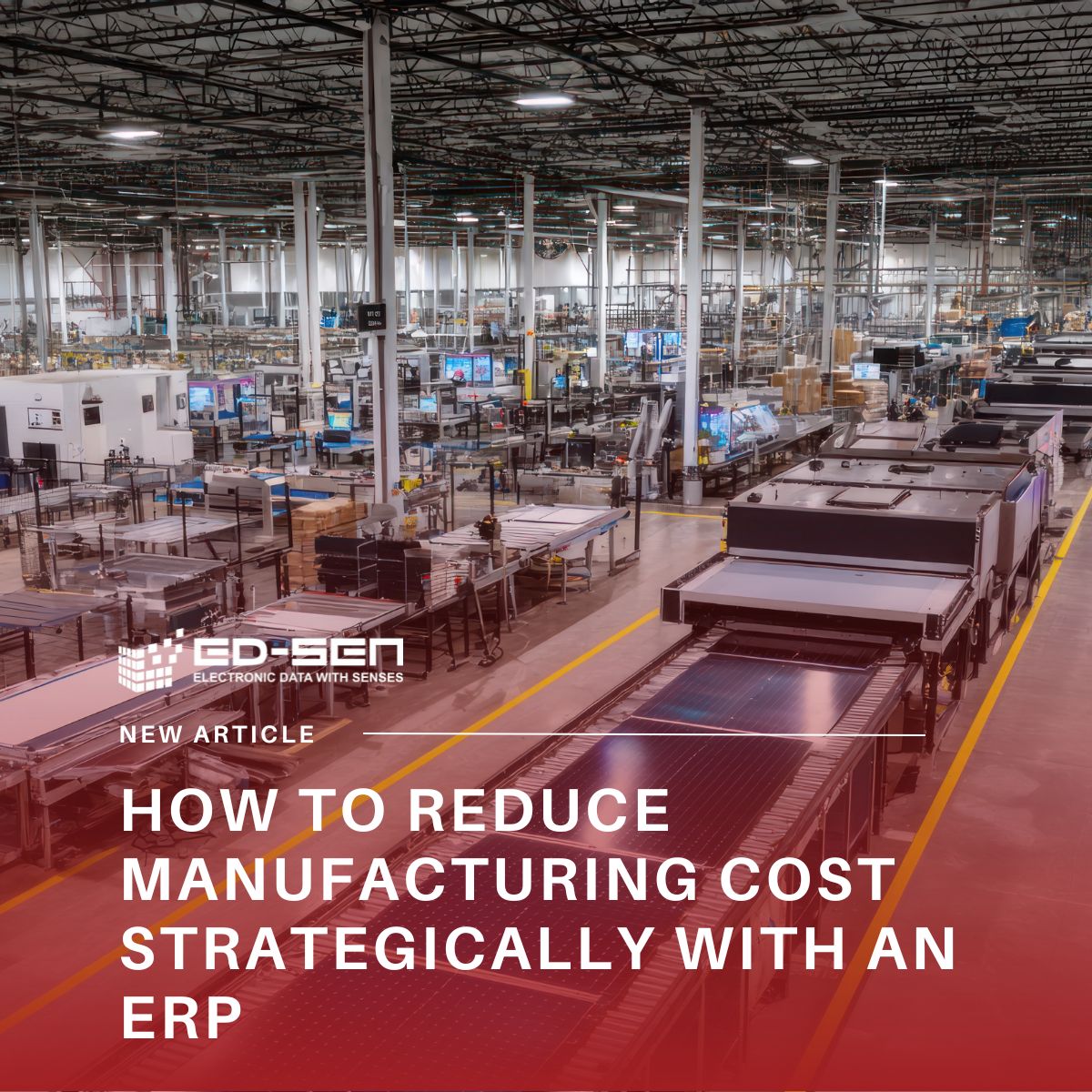
4 Proven Strategies to Reduce Manufacturing Cost with a Modern ERP
In today's competitive market, the pressure to optimize operations and boost profitability is relentless. For manufacturers, a critical component of this is effectively managing and reducing production costs. Lowering expenses without sacrificing quality is the key to sustainable growth and maintaining a competitive edge. This article will explore practical and proven strategies to reduce manufacturing costs and introduce a powerful tool that can help you achieve these goals.
Key Strategies to Reduce Manufacturing Cost
Controlling expenses in a manufacturing environment is a multifaceted challenge. It requires a holistic view of your operations, from raw materials to the final product. Here are some of the most effective strategies to implement:
1. Embrace Lean Manufacturing Principles
Lean manufacturing is a systematic method for waste minimization within a manufacturing system without sacrificing productivity. The core idea is to eliminate any activity that consumes resources but does not add value for the customer. Key areas of focus include:
- Waste Reduction: Identify and eliminate the eight wastes of lean: defects, overproduction, waiting, non-utilized talent, transportation, inventory, motion, and extra-processing.
- Continuous Improvement (Kaizen): Foster a culture where every employee is encouraged to find and eliminate inefficiencies in their daily tasks.
- Value Stream Mapping: Analyze the entire production process to identify and remove steps that do not create value.
2. Optimize Your Supply Chain
An efficient supply chain is crucial for cost reduction. Inefficiencies in sourcing, procurement, and logistics can quickly inflate your operational costs.
- Supplier Negotiation: Build strong relationships with your suppliers to negotiate better terms, bulk discounts, and favorable payment conditions.
- Strategic Sourcing: Don't rely on a single supplier. Diversifying your sources can mitigate risks and provide leverage for better pricing.
- Improve Collaboration: Share forecasts and inventory data with your key suppliers to reduce lead times and avoid costly miscommunications.
3. Smart Automation and Technology Investment
Automation is a powerful tool for reducing labor costs, improving accuracy, and increasing efficiency. However, it's crucial to automate with a clear purpose.
- Automate Repetitive Tasks: Identify manual, repetitive tasks that are prone to human error and can be easily automated. This frees up your skilled workforce to focus on more value-added activities.
- Predictive Maintenance: Utilize IoT sensors and predictive analytics to monitor machinery. This allows you to perform maintenance before a failure occurs, significantly reducing unplanned downtime and expensive repairs.
4. Efficient Inventory Management
Carrying excess inventory ties up capital and incurs storage costs. On the other hand, insufficient stock can lead to lost sales and customer dissatisfaction.
- Just-in-Time (JIT) Inventory: Implement a JIT system to receive materials from suppliers only as they are needed in the production process, which minimizes inventory holding costs.
- Inventory Tracking: Use inventory management software to get a real-time view of your stock levels. This helps in preventing overstocking and stockouts.
5. Focus on Energy Efficiency
Energy consumption can be a significant overhead for manufacturers. Implementing energy-saving measures can lead to substantial cost reductions.
- Energy Audits: Regularly conduct energy audits to identify areas of high consumption and potential wastage.
- Upgrade to Efficient Equipment: Invest in energy-efficient machinery and lighting (such as LEDs).
- Smart Controls: Use smart thermostats and sensors to manage heating, cooling, and power down equipment when not in use.
The Ultimate Solution: Acumatica Cloud ERP
Implementing these strategies manually can be a monumental task. To truly unlock their full potential and achieve significant cost savings, you need a centralized system that provides visibility, control, and intelligence across your entire operation. This is where Acumatica Cloud ERP comes in.
Acumatica is a comprehensive, cloud-based Enterprise Resource Planning (ERP) solution designed for the modern manufacturer. It integrates all aspects of your business—from the shop floor to the top floor—into a single, unified platform.
Here’s how Acumatica Cloud ERP helps you reduce manufacturing costs:
- Streamlined Operations: Acumatica automates critical manufacturing processes, from production planning and scheduling to inventory control and financial management. This reduces manual tasks, minimizes errors, and improves overall efficiency.
- Real-Time Inventory Management: Gain complete visibility into your inventory levels in real-time. Acumatica helps you optimize stock levels, reduce carrying costs, and prevent stockouts with advanced replenishment features.
- Enhanced Production Planning: With Material Requirements Planning (MRP) and Master Production Scheduling (MPS), you can accurately forecast demand, plan production, and ensure you have the right materials at the right time.
- Improved Cost Control: Acumatica provides real-time tracking of production costs, including materials, labor, and overhead. This allows you to analyze estimated vs. actual costs and make informed decisions to improve profitability.
- Data-Driven Insights: With powerful reporting and analytics, you can monitor key performance indicators (KPIs), identify trends, and gain actionable insights to continuously improve your operations and reduce costs.
By providing a single source of truth and automating key processes, Acumatica Cloud ERP empowers you to implement cost-saving strategies effectively and drive sustainable growth.
Ready to take control of reducing manufacturing costs and boost your bottom line? Contact Ed-Sen Consulting today to learn how Acumatica Cloud ERP can transform your business.
Blog • 22 September 2025
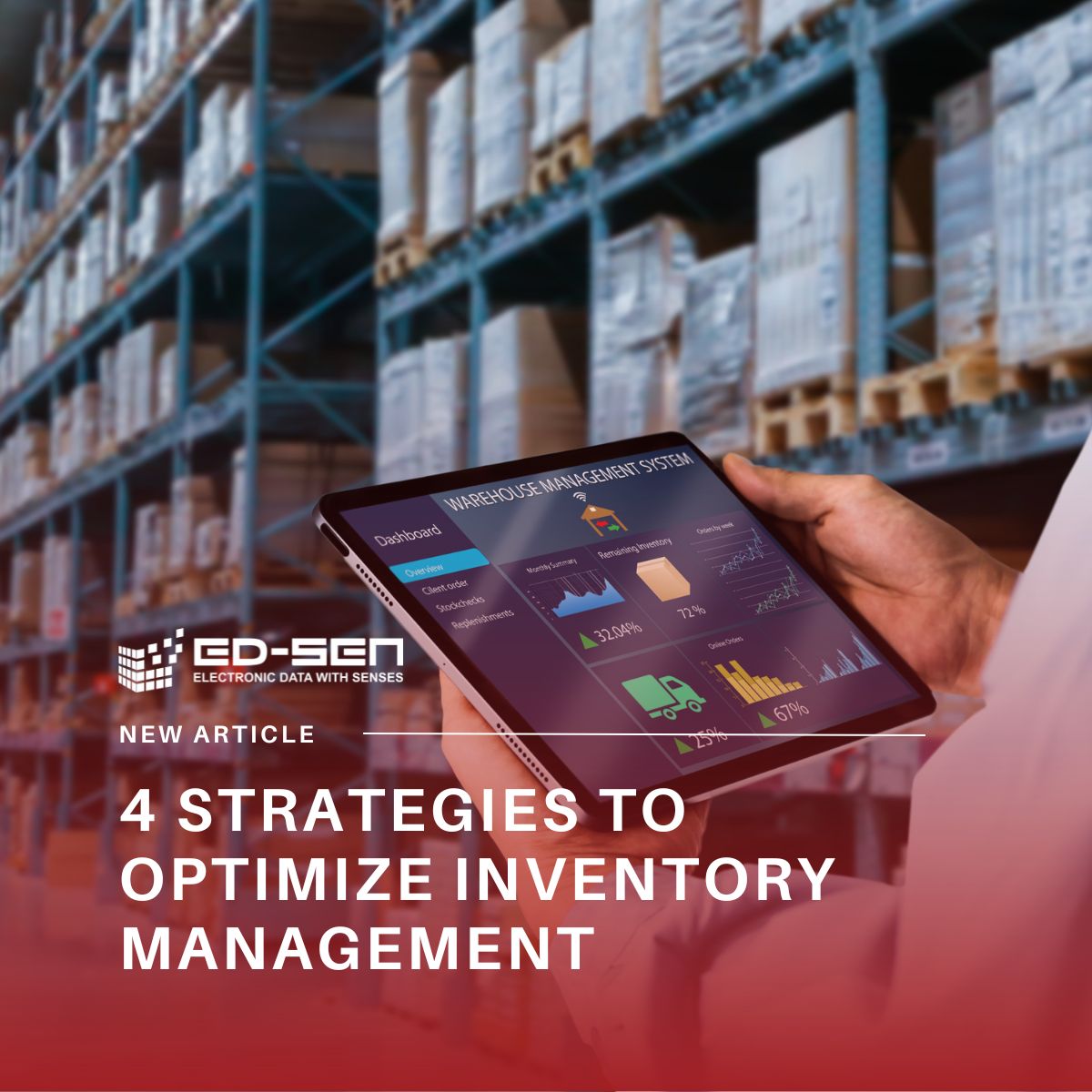
5 Proven Strategies to Optimize Inventory Management for Profitability
Inventory is one of the most significant assets on your company's balance sheet, but it can quickly become your biggest liability if mismanaged. Too much inventory ties up critical cash flow, inflates carrying costs, and risks obsolescence. Conversely, too little inventory leads to stockouts, lost sales, and frustrated customers who may never return. Achieving the perfect balance is the cornerstone of operational efficiency and profitability. It's time to optimize inventory management with a strategic, technology-driven approach.
Here are five proven strategies to transform your inventory from a challenge into a competitive advantage.
1. Achieve Real-Time Visibility Across All Channels
You cannot manage what you cannot see. The foundational step to optimize inventory management is establishing a single, accurate, and real-time view of your stock—whether it's in a warehouse, across multiple distribution centers, in transit, or on retail shelves. Relying on manual counts and outdated spreadsheets is a recipe for disaster in today's fast-paced market.
A modern inventory system provides live data, eliminating guesswork and empowering your team to make immediate, informed decisions about transfers, purchasing, and order fulfillment. This unified visibility is crucial for preventing discrepancies and ensuring data integrity across your entire operation.
2. Implement Data-Driven Demand Forecasting
Guesswork is the enemy of efficient inventory control. Instead of relying on intuition or historical averages alone, you must leverage your own data to accurately predict future demand. An integrated system can analyze historical sales trends, identify patterns of seasonality, and account for market fluctuations to generate reliable forecasts.
This data-driven approach allows you to stock the right products in the right quantities at the right time. By aligning your inventory levels with anticipated customer demand, you can dramatically reduce carrying costs associated with overstocking while simultaneously minimizing the risk of costly stockouts.
3. Automate Reorder Points and Purchasing
Manually tracking thousands of SKUs to determine when to reorder is not only inefficient but also highly susceptible to human error. To truly scale your operations and optimize inventory management, you must automate this critical process.
By setting dynamic reorder points (min/max levels) within an ERP system, you can create a proactive replenishment strategy. When stock for an item hits the minimum threshold, the system can automatically generate a purchase requisition or a purchase order for approval. This ensures you never run out of your most critical items and frees up your procurement team to focus on strategic tasks like supplier negotiation rather than manual data entry.
4. Utilize ABC Analysis and Costing Methods
Not all inventory is created equal. The Pareto Principle (80/20 rule) often applies, meaning a small percentage of your items generate the majority of your revenue. An ABC analysis helps you categorize items based on their importance:
- A-Items: High-value products with a low frequency of sales.
- B-Items: Moderate-value products with a moderate frequency of sales.
- C-Items: Low-value products with a high frequency of sales.
This insight allows you to prioritize your management efforts, optimize warehouse layouts for faster picking, and make strategic decisions about which products to promote or discontinue. Combining this with accurate costing methods (e.g., FIFO, LIFO, Average Costing) gives you a clear picture of your inventory's true financial impact. Read also optimize inventory management in acumatica.
5. Improve Warehouse Organization and Slotting
An optimized warehouse is an efficient warehouse. Strategic slotting—the process of organizing products within your warehouse—can significantly reduce put-away and picking times, which in turn lowers labor costs.
Group fast-moving items together near shipping areas, place heavy items on lower shelves, and ensure your layout minimizes travel time for your staff. A well-organized warehouse not only improves operational speed but also reduces picking errors, leading to higher order accuracy and greater customer satisfaction.
Master Your Inventory with Acumatica Cloud ERP
Implementing these strategies effectively requires more than just good intentions; it demands a powerful, centralized platform that unifies your data and automates your processes.
Acumatica Cloud ERP provides the advanced, integrated tools you need to optimize inventory management from end to end. As a complete business management solution, Acumatica connects your inventory data with sales, purchasing, and financials in real time.
With Acumatica, you can:
- Gain Real-Time Visibility: Utilize intuitive dashboards to monitor inventory levels across multiple locations.
- Forecast with Confidence: Leverage powerful analytics and machine learning to predict demand accurately.
- Automate Purchasing: Set automatic reorder points to prevent stockouts and streamline procurement.
- Analyze Performance: Use built-in reporting to perform ABC analysis and track key metrics like inventory turnover.
Stop letting poor inventory control dictate your profitability. Contact Ed-Sen Consulting today to discover how Acumatica Cloud ERP can provide the visibility and control you need to turn your inventory into a strategic asset.
Click here to see how the company can optimize inventory management