
Archives
Result
Blog • 10 December 2025
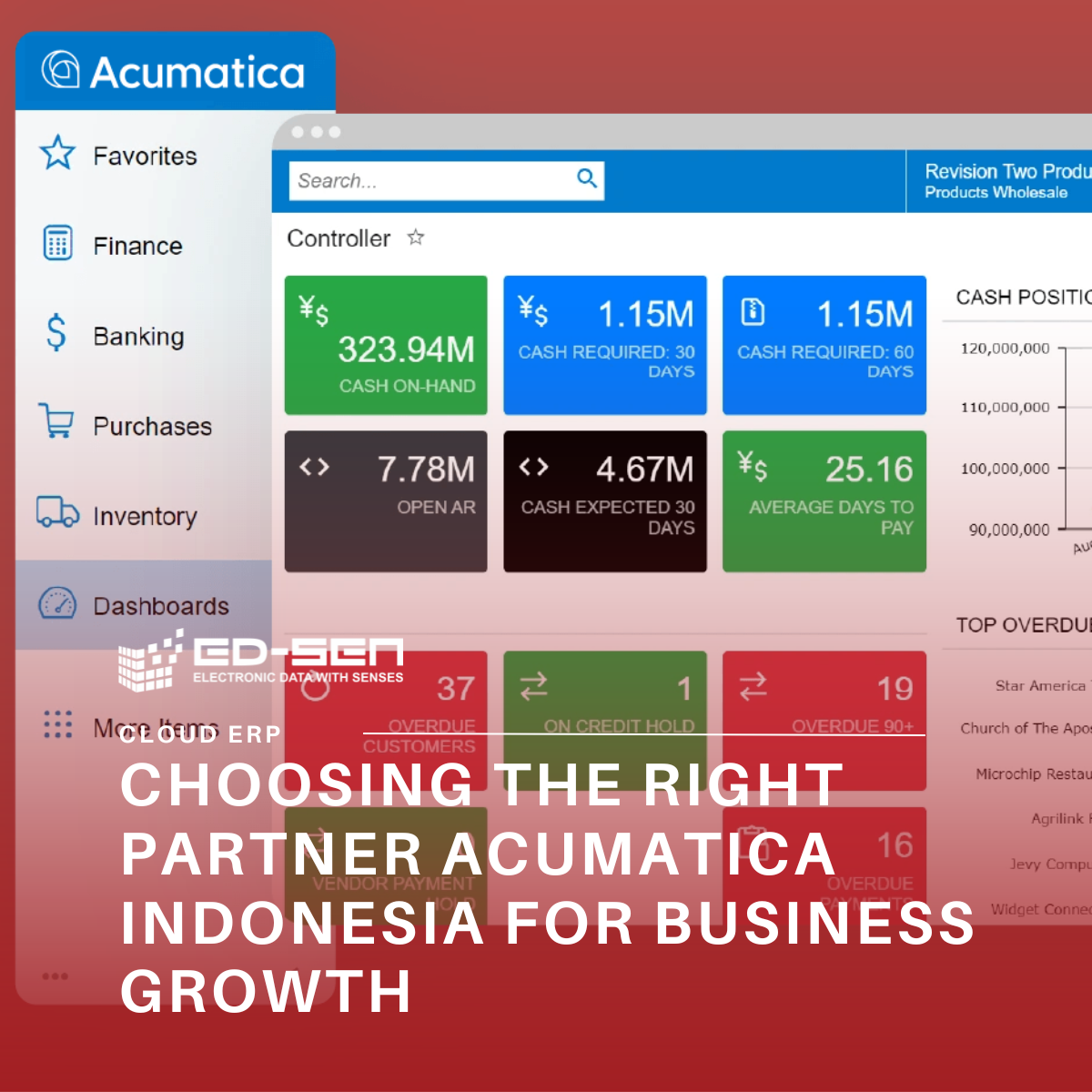
Choosing the Right Partner Acumatica Indonesia for Business Growth
In the rapidly evolving landscape of the Indonesian economy, digital transformation is no longer a luxury—it is a necessity. For businesses ranging from manufacturing to retail, implementing a robust Cloud ERP is the key to scaling operations. However, purchasing top-tier software is only half the battle. The critical factor for success lies in choosing the right partner Acumatica Indonesia.
Software is only as good as its implementation. Without a certified and experienced consultant to guide the deployment, even the best ERP can fail to deliver a return on investment. This guide explores what you should look for in an implementation partner and why the right choice defines your future success.
Table of Contents
- Why Your Choice of Partner Matters More Than Software
- Key Criteria for Selecting a Partner Acumatica Indonesia
- The Importance of Local Expertise (PSAK & Tax)
- Why Edsen Consulting is Your Trusted Gold Partner
- Unlock Your Potential with Acumatica Cloud ERP
1. Why Your Choice of Partner Matters More Than Software
An ERP implementation is akin to open-heart surgery for your business. It touches every department, from finance and procurement to sales and inventory.
When searching for a partner Acumatica Indonesia, you are not just looking for a vendor who sells licenses. You are looking for a strategic consultant. A qualified partner assesses your unique business processes, identifies inefficiencies, and configures the software to solve specific problems.
Statistics show that a significant percentage of ERP projects fail not because of the technology, but because of poor implementation strategies. A capable partner mitigates this risk, ensuring a smooth transition from legacy systems to the cloud.
2. Key Criteria for Selecting a Partner Acumatica Indonesia
Not all consultants are created equal. To ensure your project succeeds, you must evaluate potential partners based on rigorous standards:
- Certification Level: Acumatica awards different partnership levels (Silver, Gold) based on customer satisfaction and technical proficiency. A partner Acumatica Indonesia with Gold status has proven their capability repeatedly.
- Industry Experience: Does the partner understand your specific industry? A partner skilled in retail might not have the engineering knowledge required for complex manufacturing.
- Support Capabilities: Implementation is just the beginning. You need a partner who provides ongoing local support, training, and optimization services.
3. The Importance of Local Expertise (PSAK & Tax)
Using a global ERP in the Indonesian market presents unique challenges regarding compliance. This is where a local partner Acumatica Indonesia becomes indispensable.
Your partner must be able to configure Acumatica to handle:
- Indonesian Tax Regulations: Seamless management of PPN (VAT), PPh 23, and e-Faktur integration.
- PSAK Compliance: Ensuring financial reports meet the Pernyataan Standar Akuntansi Keuangan (PSAK).
- Language and Culture: Providing training and support in Bahasa Indonesia to ensure high user adoption rates among your staff.
4. Why Edsen Consulting is Your Trusted Gold Partner
When it comes to finding a reliable partner Acumatica Indonesia, Ed-Sen Consulting stands out as a leader in the field.
As an Acumatica Gold Certified Partner, Ed-Sen Consulting has demonstrated the highest level of technical expertise and customer dedication. We don't just follow a template; we use a proven methodology to tailor the system to your needs.
Why Choose Ed-Sen Consulting?
- Proven Track Record: Successful implementations across various industries in Indonesia.
- Deep Technical Knowledge: Our team comprises certified developers and functional consultants.
- Business-First Approach: We focus on improving your business outcomes, not just installing software.
5. Unlock Your Potential with Acumatica Cloud ERP
Choosing Ed-Sen Consulting means you are choosing the power of Acumatica Cloud ERP.
Acumatica is the world’s fastest-growing cloud ERP, renowned for its:
- Unlimited User Licensing: Scale your business without being punished by per-user fees.
- True Cloud Mobility: Access your data from anywhere, on any device.
- Connected Business: Seamlessly integrate with other tools to create a single source of truth.
Ready to transform your business with a trusted guide?
Don't leave your ERP success to chance. Partner with the experts who know Acumatica and Indonesia best.
Contact Ed-Sen Consulting today to schedule a consultation with the premier partner Acumatica Indonesia and start your journey toward operational excellence.

Acumatica ERP Manufacturing • 10 December 2025
Acumatica Indonesia: The #1 Cloud ERP Solution for Local Business Growth
Indonesia is currently undergoing a massive digital transformation. From the bustling manufacturing hubs of Cikarang to the rapid retail expansion in Jakarta and Surabaya, businesses are realizing that legacy, on-premise software can no longer keep up with the pace of the market. To survive and thrive, modern enterprises need a system that is agile, accessible, and compliant. This is why Acumatica Indonesia has become the preferred keyword for forward-thinking CFOs and CTOs.
But with so many ERP options available in the archipelago, what makes Acumatica stand out? This guide explores how Acumatica is uniquely positioned to solve the specific challenges faced by Indonesian businesses today.
Table of Contents
- Why Indonesian Businesses Are Moving to the Cloud
- Key Features of Acumatica Indonesia for Local Growth
- Solving the High Cost of Licensing
- Local Compliance and Support
- Partner with the Best: Ed-Sen Consulting
1. Why Indonesian Businesses Are Moving to the Cloud
Indonesia is an archipelago of over 17,000 islands. For a business with a head office in Jakarta, a factory in West Java, and distribution centers in Sumatra and Sulawesi, connectivity is everything.
Legacy on-premise ERPs require expensive private networks (VPNs) and heavy server maintenance at every location. Acumatica Indonesia changes this paradigm. As a true cloud solution, it is accessible via any standard web browser on any device.
- Work form Anywhere: Your sales team in Bali can check inventory real-time.
- No Heavy Infrastructure: Eliminate the need for expensive server rooms and IT maintenance teams at every branch.
- Disaster Recovery: Your data is backed up securely in the cloud, protecting you from local hardware failures or power outages.
2. Key Features of Acumatica Indonesia for Local Growth
Acumatica is not just a "one-size-fits-all" software; it is highly adaptable to the industries driving Indonesia's economy.
For Manufacturing & Distribution
Indonesia is a manufacturing powerhouse. Acumatica offers deep functionality for production planning, Material Requirements Planning (MRP), and shop floor data collection. It helps local manufacturers reduce waste and optimize supply chains in a logistics-heavy environment.
For Retail & eCommerce
With the explosion of marketplaces like Tokopedia and Shopee, Indonesian retailers need omnichannel capabilities. Acumatica integrates your online and offline sales channels, ensuring that your inventory is always accurate across all platforms.
3. Solving the High Cost of Licensing
One of the biggest barriers to ERP adoption in Indonesia is the cost of user licenses. Most global ERP vendors charge a fee for every single user. As your company grows, your software bill skyrockets, forcing you to limit access to only a few managers.
Acumatica Indonesia offers a revolutionary unlimited user pricing model. You pay for the computing resources you use, not the number of people logging in. This allows you to give access to everyone—from the warehouse staff to the procurement team—without paying extra. This promotes transparency and collaboration across the entire organization.
4. Local Compliance and Support
Using a global ERP in Indonesia often brings challenges regarding local regulations, such as PSAK standards and tax requirements (PPN, PPh).
This is why choosing the right Acumatica Indonesia partner is critical. A robust implementation ensures that your system is configured to handle:
- Indonesian Tax Localization: Handling VAT (PPN) in/out and Withholding Tax (PPh 23/21/4(2)).
- Multi-Currency: Managing transactions in IDR, USD, SGD, and more seamlessly.
- Financial Reporting: Generating reports that meet local audit standards.
5. Partner with the Best: Ed-Sen Consulting
To unlock the full potential of Acumatica Indonesia, you need a partner who understands both the technology and the local business culture.
Ed-Sen Consulting is a Gold Certified Acumatica Partner dedicated to helping Indonesian businesses transform. We don't just install software; we analyze your business processes to implement a solution that drives efficiency and profitability.
Ready to modernize your business?
Stop letting outdated technology hold you back. Experience the power of the cloud with a partner who understands your needs.
Contact Ed-Sen Consulting today for a free consultation and demo of Acumatica Cloud ERP.
Acumatica ERP Manufacturing • 10 December 2025
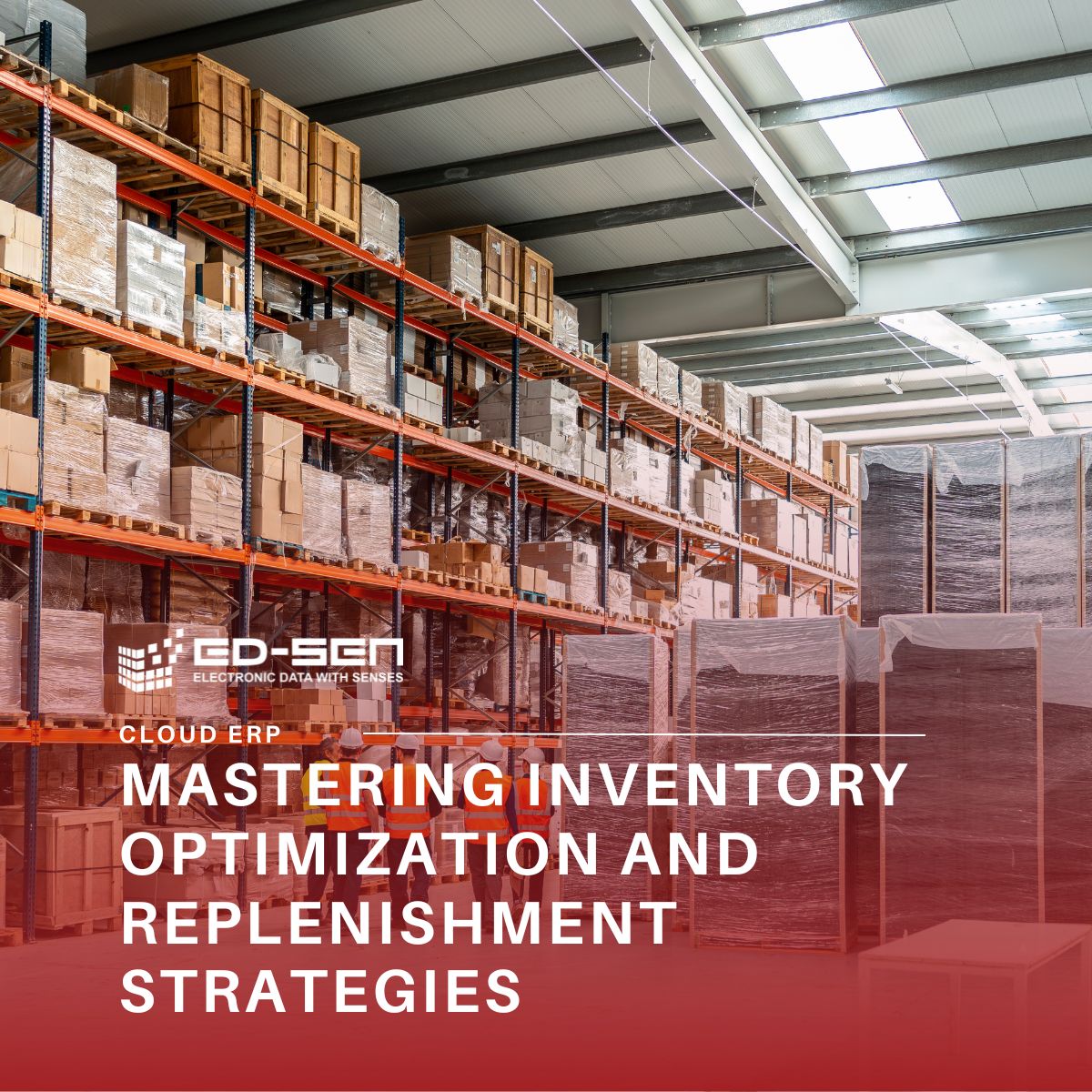
Mastering Inventory Optimization and Replenishment Strategies
In the world of distribution and retail, inventory is a double-edged sword. Holding too much ties up capital and risks obsolescence, while holding too little leads to stockouts and lost revenue. The bridge between these two extremes lies in effective inventory optimization and replenishment strategies.
For modern businesses, managing stock is no longer just about counting boxes; it is about leveraging data to predict the future. Whether you are a supply chain manager or a business owner, mastering these strategies is essential for maintaining a healthy cash flow and satisfied customers.
This guide explores the methodologies that transform inventory management from a guessing game into a precise science.
Table of Contents
- The Difference Between Optimization and Replenishment
- Key Inventory Optimization and Replenishment Strategies
- The Role of Demand Forecasting
- Why Spreadsheets Are Failing You
- Automate Your Success with Acumatica Cloud ERP
1. The Difference Between Optimization and Replenishment
While often used interchangeably, these two concepts serve different purposes within the supply chain.
- Inventory Optimization is the strategic balancing act. It involves determining the ideal stock levels to meet service targets while minimizing capital investment.
- Replenishment is the tactical execution. It is the action of moving products through the supply chain to maintain those optimal levels.
To succeed, you must integrate inventory optimization and replenishment strategies into a single, cohesive workflow. One cannot function effectively without the other.
2. Key Inventory Optimization and Replenishment Strategies
To maximize profitability, consider implementing these proven methodologies:
ABC Analysis
Not all products are equal. Segment your inventory into three categories:
- A-Items: High value, tightly controlled.
- B-Items: Moderate value and volume.
- C-Items: Low value, high volume. By applying different inventory optimization and replenishment strategies to each category, you focus your resources where they matter most.
Dynamic Safety Stock
Static safety stock levels are a recipe for disaster. Market demand fluctuates. Your strategies should include dynamic safety stock calculations that adjust automatically based on lead time variability and seasonal demand changes.
Just-in-Time (JIT) Replenishment
For businesses looking to minimize carrying costs, JIT is a powerful strategy. It involves ordering inventory only as it is needed for production or sales. However, this requires a highly reliable supply chain and precise data visibility.
3. The Role of Demand Forecasting
You cannot optimize what you cannot predict. Accurate demand forecasting is the backbone of successful inventory optimization and replenishment strategies.
By analyzing historical sales data, seasonal trends, and current market conditions, businesses can anticipate customer needs before they arise. This proactive approach prevents the "bullwhip effect" and ensures that replenishment orders are accurate and timely.
4. Why Spreadsheets Are Failing You
Many companies still rely on Excel to manage these complex calculations. While familiar, spreadsheets are prone to human error, lack real-time data, and cannot scale with your business.
Manual entry creates data silos. When your sales data doesn't talk to your purchasing data instantly, your inventory optimization and replenishment strategies fall apart. In a fast-paced market, you need a system that calculates reorder points and lead times automatically.
5. Automate Your Success with Acumatica Cloud ERP
To execute these strategies effectively, you need a technology platform built for modern commerce.
Acumatica Cloud ERP offers comprehensive inventory management tools designed to automate the heavy lifting. With Acumatica, you can eliminate manual guesswork and drive efficiency.
Why Choose Acumatica?
- Automated Replenishment: System-generated purchase orders based on real-time sales data and lead times.
- Integrated Forecasting: Built-in tools to predict demand trends and adjust stock levels dynamically.
- Real-Time Visibility: Access inventory data from anywhere, ensuring your team is always aligned.
Ready to Optimize Your Inventory?
Stop letting excess stock eat your profits. Partner with Ed-Sen Consulting to implement a solution that turns your inventory into a competitive advantage.
Contact Ed-Sen Consulting today for a personalized demo of Acumatica Cloud ERP and revolutionize your supply chain operations.
Blog • 10 December 2025
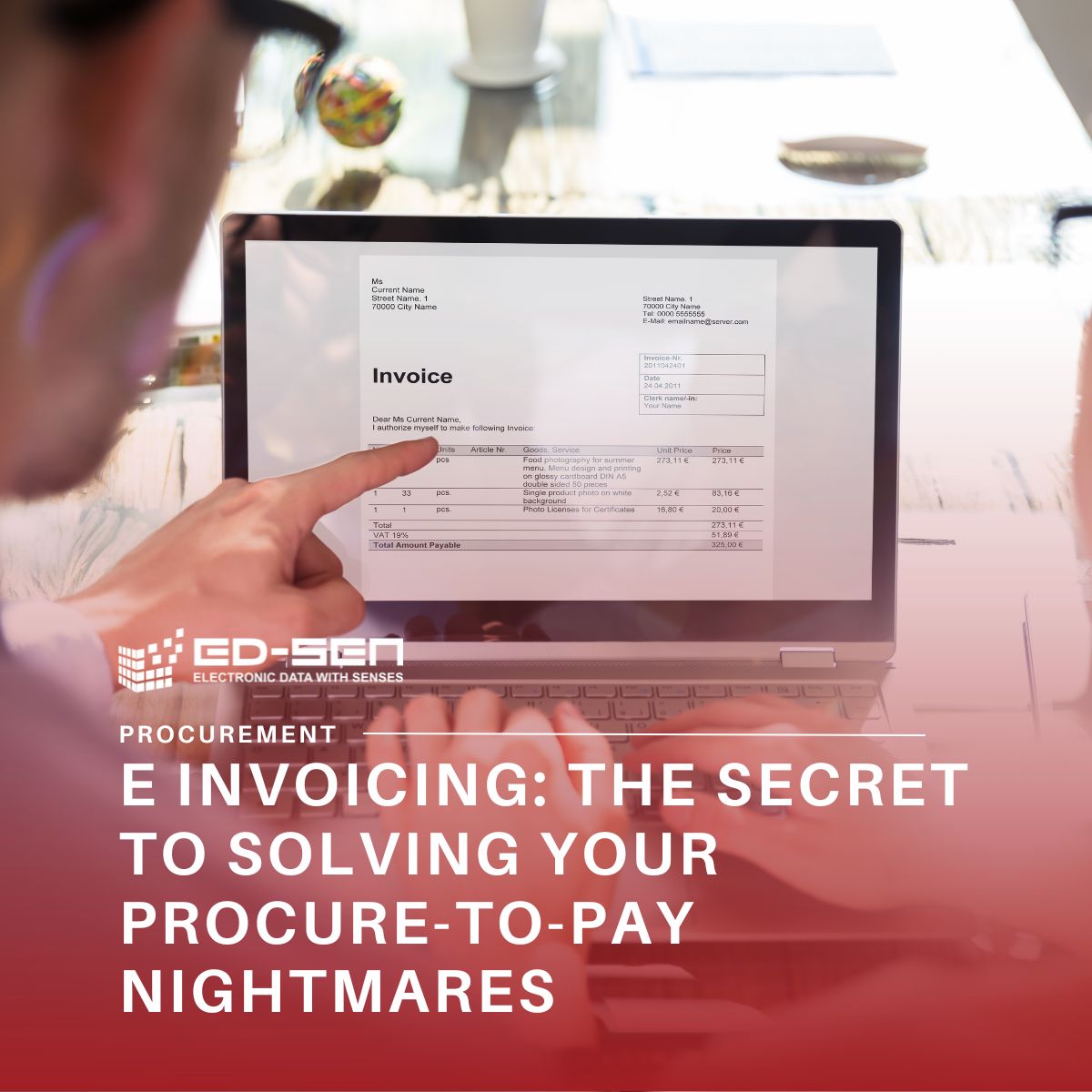
E Invoicing: The Secret to Solving Your Procure-to-Pay Nightmares
If your team is struggling with slow approvals, lost documents, or duplicate payments, you are facing the classic symptoms of a manual workflow. The cure for these operational headaches starts with a single, powerful shift: adopting e invoicing. Is your Accounts Payable (AP) department drowning in paper? In 2025, the biggest bottleneck in the Procure-to-Pay (P2P) cycle isn't a lack of funds; it's the inability to process data efficiently.
This guide explores how electronic invoicing serves as the foundation for modern P2P automation and solves the most critical pain points finance leaders face today.
What is E Invoicing (And What It Isn't)
Before we fix the problems, let's clarify the solution. True e invoicing is not simply emailing a PDF to a vendor. A PDF is just a digital picture of paper; it still requires someone to open it, read it, and manually type the data into your ERP.
True e invoicing involves the automated exchange of structured data between the supplier’s system and the buyer’s system. It eliminates the need for manual data entry entirely.
Top 3 P2P Pain Points Solved by E Invoicing
Why is e invoicing trending? Because it directly addresses the three most expensive problems in the procurement lifecycle.
1. Pain Point: The "Data Entry" Money Pit
- The Problem: Manual data entry is the silent killer of productivity. Research shows that AP clerks spend huge amounts of time keying in invoice numbers, dates, and line items. This process is slow, boring, and prone to "fat-finger" errors.
- The Solution: With e invoicing, the data flows directly into your system. There is no typing. This reduces processing costs by up to 80% and frees your staff to focus on strategic analysis rather than data entry.
2. Pain Point: The "Where is My Payment?" Email Flood
- The Problem: Lack of visibility. When an invoice arrives via mail or email, it enters a "black hole." Suppliers call constantly to ask for status updates, and your team wastes hours tracking down which manager's desk the invoice is stuck on.
- The Solution: E invoicing provides instant, real-time visibility. Both you and your supplier can see exactly when an invoice was received, processed, and approved.
3. Pain Point: Fraud and Duplicate Payments
- The Problem: Invoice fraud (Business Email Compromise) and accidental duplicate payments are rising. Without a digital system to cross-reference data, it is easy to pay a fake invoice or pay the same vendor twice.
- The Solution: Automated validation. An e invoicing system automatically creates a digital audit trail and performs a 3-way match against your Purchase Orders (PO) and Goods Receipts, flagging discrepancies immediately.
From E Invoicing to Full P2P Automation
While e invoicing captures the data, you need a robust engine to process it. You need a solution that takes that digital invoice and routes it for approval, integrates it with your ERP, and executes the payment.
You need an intelligent, end-to-end platform.
Yooz: The Ultimate Evolution of E Invoicing
Don't just digitize your invoices; automate your entire financial workflow with Yooz.
Yooz P2P Automation is the smartest cloud-based solution on the market. It leverages advanced AI to handle every format of invoice—whether it's a true e-invoice, a PDF, or a paper scan.
- Zero-Touch Processing: Yooz automates 80%+ of invoices without human intervention.
- Seamless Integration: It connects perfectly with your existing ERP (SAP, Microsoft Dynamics, etc.).
- Total Control: Gain 100% visibility into your spending and secure your business against fraud.
Stop letting manual processes drain your resources. It’s time to switch to the future of finance.
Contact Ed-Sen Consulting today to learn how Yooz P2P Automation can transform your AP process.
Acumatica ERP Manufacturing • 9 December 2025
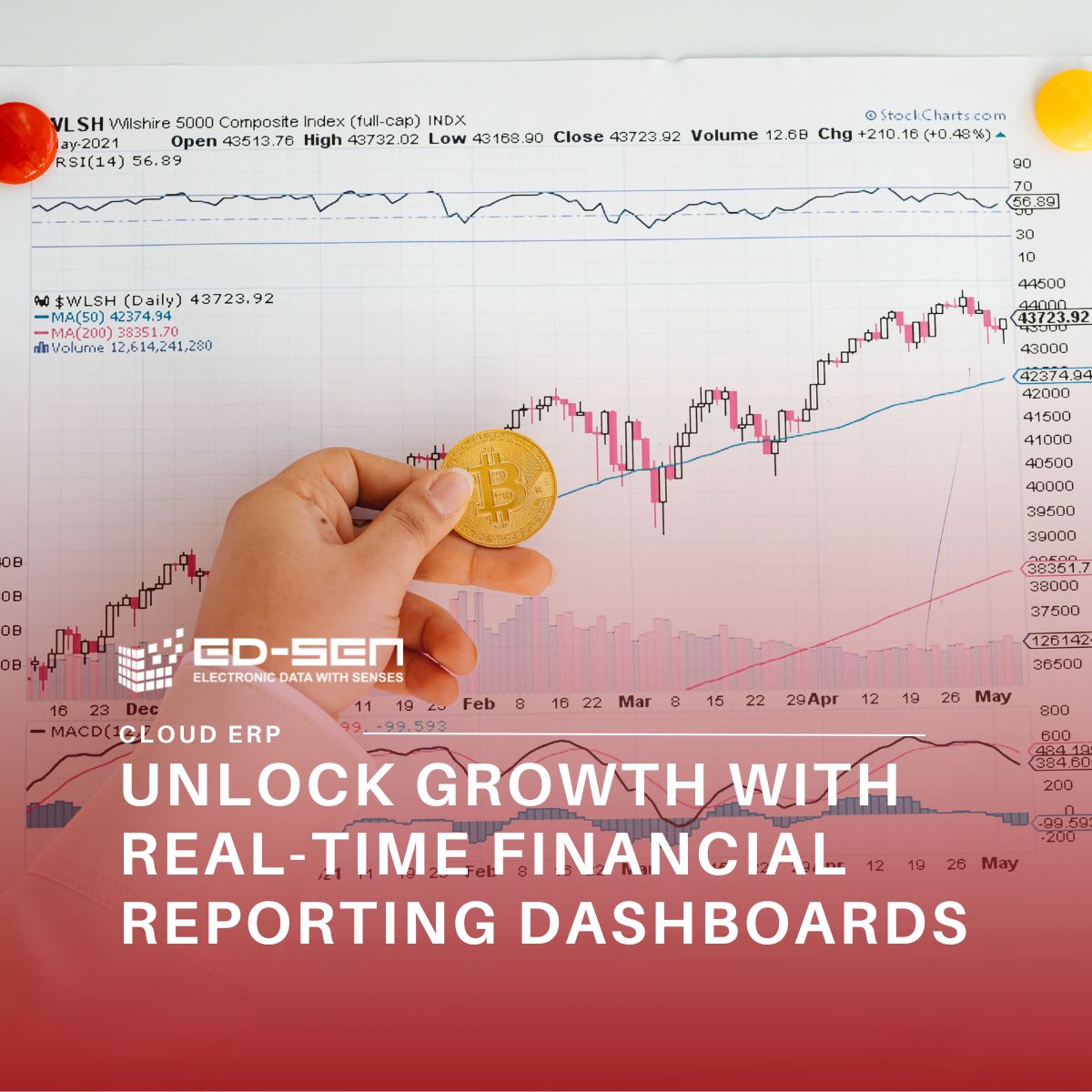
Unlock Growth with Real-Time Financial Reporting Dashboards
In the modern business landscape, speed is currency. Yet, many finance teams are still stuck looking in the rearview mirror. They rely on static, end-of-month spreadsheets that are outdated the moment they are printed. To navigate today's volatile market, business leaders need immediate visibility. This is where real-time financial reporting dashboards become a game-changer.
Moving beyond basic bookkeeping, these dynamic tools provide a live pulse of your organization’s health. But how exactly do they drive growth, and why should your business invest in them? This guide explores the strategic value of modernizing your financial analytics.
Table of Contents
- The Problem with Static Financial Reports
- Key Benefits of Real-Time Financial Reporting Dashboards
- Essential Metrics You Should Track
- From Data Entry to Strategic Analysis
- Visualize Your Success with Acumatica Cloud ERP
1. The Problem with Static Financial Reports
Traditional reporting methods are inherently reactive. By the time you close the books and generate a P&L statement, weeks may have passed since the actual transactions occurred. This delay creates a "decision lag."
Without real-time financial reporting dashboards, you risk:
- Missed Opportunities: Failing to spot a profitable trend before it fades.
- Cash Flow Gaps: Not realizing a major customer is late on payments until it impacts payroll.
- Operational Blind Spots: Inability to track project costs as they happen, leading to budget overruns.
2. Key Benefits of Real-Time Financial Reporting Dashboards
Implementing a system that offers live data visualization transforms the finance function from a scorekeeper to a strategic business partner.
Instant Decision Making
When you have access to real-time financial reporting dashboards, you can make decisions based on facts, not guesswork. Whether it is approving a new purchase or adjusting pricing strategies, the data is always at your fingertips.
Enhanced Agility
Market conditions change fast. A sudden spike in supply costs or a drop in regional sales can be identified instantly, allowing you to pivot your strategy immediately rather than waiting for the quarterly review.
Single Source of Truth
Dashboards eliminate the confusion of conflicting spreadsheets. Everyone in the organization—from the CEO to the sales manager—looks at the same numbers, fostering alignment and accountability.
3. Essential Metrics You Should Track
A great dashboard is not just about pretty charts; it is about actionable insights. An effective real-time financial reporting dashboard should track:
- Cash Flow: Daily cash position and forecasts.
- Accounts Receivable/Payable: Aging reports to manage liquidity.
- Profit Margins: Gross and net margins by product line or region.
- Revenue vs. Goal: Live tracking of sales performance against targets.
4. From Data Entry to Strategic Analysis
The ultimate goal of adopting these tools is to free your finance team from the drudgery of manual data entry. Instead of spending 80% of their time compiling data and only 20% analyzing it, automation flips the ratio.
With real-time financial reporting dashboards, your team can focus on interpreting the data, forecasting future trends, and advising the C-suite on strategic growth initiatives.
5. Visualize Your Success with Acumatica Cloud ERP
To achieve true real-time visibility, you need a platform that unifies your entire business. Standalone accounting apps often struggle to provide deep insights because they are disconnected from operations.
Acumatica Cloud ERP is designed for the data-driven enterprise. It offers powerful, built-in real-time financial reporting dashboards that are fully customizable without coding.
Why Acumatica?
- Personalized Views: Create unique dashboards for every role, ensuring users see only what matters to them.
- Drill-Down Capability: See a concerning number on a chart? Click it to drill down instantly to the specific invoice or transaction level.
- Anywhere Access: Monitor your business health from a mobile device, tablet, or laptop—anytime, anywhere.
Ready to turn your data into your biggest competitive advantage?
Don't let outdated reports slow you down. Partner with Ed-Sen Consulting to implement a solution that brings clarity to your chaos.
Contact Ed-Sen Consulting today for a live demo of Acumatica’s powerful dashboards and take control of your financial future.
Blog • 9 December 2025
Stop Maverick Spend: Why Your Business Needs a Guided Procurement System
Why is it that an employee can buy a laptop on Amazon in three clicks from their couch, but buying a laptop for work requires five forms, three emails, and a week of waiting? The solution isn't more strict rules; it's a better user experience. This is where a guided procurement system changes the game. By acting as a digital "GPS" for your purchasing process, it leads employees to the right products and the right vendors—automatically.
This "user experience gap" is the root cause of procurement’s biggest headache: Maverick Spend. When your purchasing process is complex and confusing, employees bypass it. They buy what they want, from vendors they choose, at prices you haven't negotiated.
The Problem: Why Traditional Procurement Fails the User
Top search trends in procurement right now revolve around "increasing user adoption" and "reducing rogue spending." These pain points exist because traditional e-procurement tools are often clunky and unintuitive.
- Complexity Breeds Non-Compliance: If an employee has to read a 20-page manual to create a purchase requisition, they won't do it. They will use their corporate card or file a reimbursement later, bypassing your controls.
- Invisible Preferred Vendors: You spent months negotiating a 20% discount with a specific stationery supplier. But if your system doesn't highlight that vendor clearly, employees will just buy from the first site they find on Google, costing you money.
- The "Where is my Approval?" Black Hole: Without a transparent system, employees waste time chasing managers for approvals via email, leading to frustration and operational delays.
What is a Guided Procurement System?
A guided procurement system (often called "guided buying") is a user-centric interface that directs employees through the purchasing process using compliant paths.
Think of it as the "Amazon-like" experience for B2B. When a user logs in, they aren't met with blank forms. They are greeted with curated catalogs, preferred items, and simple search bars. The system works in the background to ensure every click complies with company policy.
- For the User: It’s easy. They search, click, and submit.
- For the Business: It’s controlled. The system ensures they only see approved vendors, correct pricing, and that the request is automatically routed to the right budget approver.
[Image: A comparison split-screen. Left side: Confused employee with stacks of paper forms. Right side: Happy employee using a clean, digital interface on a tablet.]
3 Ways a Guided Procurement System Solves Your Pain Points
Implementing this technology directly addresses the most searched-for procurement challenges.
1. Eliminating Maverick Spend by Design
You can’t simply tell people to follow the rules; you have to make following the rules the easiest option. A guided procurement system makes the compliant path the path of least resistance. By surfacing preferred goods and services at the top of search results, you naturally steer spending toward your negotiated contracts without the user even realizing they are being "guided."
2. Automating Policy Compliance
Forget about manual checks. A guided system has your policies built-in.
- Need to buy IT equipment? The system automatically prompts the user to attach a required quote.
- Exceeding a budget limit? The system flags it immediately before the order can be placed. This "guardrail" approach ensures that errors are caught at the source, not by the AP team weeks later.
3. Drastically Reducing Cycle Times
When the input data is correct from the start (correct vendor, correct price, correct GL code), the downstream process flies. Approvers get clean data they can approve instantly from their mobile devices. What used to take weeks of back-and-forth emails can now be done in minutes.
Yooz: The Ultimate Guided Procurement Experience
A guided procurement system is only as good as the automation behind it. This is why leading organizations choose Yooz.
Yooz isn't just about paying invoices; it's about perfecting the entire Procure-to-Pay (P2P) journey. Yooz offers a powerful, intuitive purchase request module that acts as the perfect guided buying interface for your team.
With Yooz, you can:
- Simplify Requests: Empower employees to create purchase requests in seconds with a user-friendly, shopping-cart style experience.
- Enforce Compliance: Automatically route requests based on budget, department, or amount to the correct approver.
- Seamless Integration: Once approved, Yooz automatically converts the request into a Purchase Order and sends it to the vendor, creating a seamless, touchless workflow.
Stop fighting with your employees over compliance. Give them a tool they actually want to use.
Contact Ed-Sen Consulting today to see how Yooz P2P Automation can implement a guided procurement system for your business.